10 Best Synthetic Sling Options for Ultimate Durability and Performance?
In the world of lifting and rigging, synthetic slings play a vital role. These versatile tools are known for their strength and adaptability. Richard Morgan, a leading expert in the synthetic sling industry, states, "Choosing the right synthetic sling is crucial for both safety and efficiency." His words resonate deeply in today's demanding work environments.
Synthetic slings are lightweight yet remarkably strong. They come in various sizes, ensuring they meet diverse needs. However, not every option on the market delivers the same level of performance. Some struggle under maximum load, while others may wear out quickly, leaving users frustrated.
Quality matters significantly when selecting a synthetic sling. A poorly made sling can lead to accidents, jeopardizing not only equipment but also lives. Therefore, it's essential to consider durability and how a sling performs under pressure. This guide highlights the ten best options available, showcasing their unique features and benefits. Each choice reflects the industry's commitment to safety and excellence.
Understanding Synthetic Slings: Key Features and Benefits
When it comes to lifting and securing heavy loads, synthetic slings
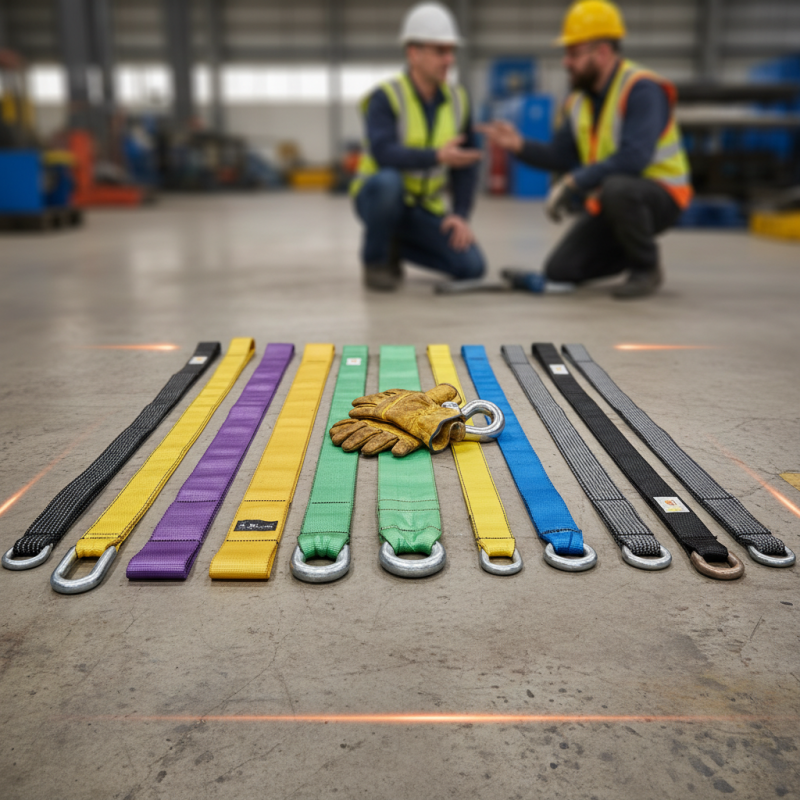
stand out for their versatility and durability. They are crafted from high-strength materials, typically including nylon or polyester.
These materials offer impressive tensile strength, often exceeding 30,000 pounds in some models.
According to the Association for the Machinery and Equipment Industry, synthetic slings have been shown to reduce load damage, primarily due to their flexibility.
One of the key features of synthetic slings is their lightweight nature, which enhances ease of use.
Workers can handle them without the strain typically associated with steel slings.
However, some users might overlook their maintenance needs. Regular inspections are crucial to ensure slings remain in safe working condition.
Damage from abrasion or UV exposure can compromise their effectiveness, a detail that is often underestimated in field operations.
Synthetic slings also boast excellent resistance to chemicals and moisture.
This makes them ideal for diverse environments, from construction sites to marine applications.
Yet, it’s important to note that these slings are not impervious to wear.
Users should remain vigilant about wear points, especially where slings rub against surfaces.
Even with high performance, the need for continual assessment remains critical for ensuring safety.
Top Materials Used in Synthetic Slings for Strength and Durability
Synthetic slings have become essential in various industries due to their impressive durability and strength. The materials used in these slings play a crucial role in their performance. Commonly, high-tenacity polyester is favored for its excellent resistance to abrasion. This material can withstand heavy loads without fraying easily. However, it's essential to acknowledge that polyester may degrade under prolonged exposure to UV light.
Another popular option is nylon. It boasts higher elasticity, providing shock absorption during heavy lifting. While nylon offers more flexibility, it can be susceptible to chemical damage. This makes it vital to assess the environment where the sling will be used. Not all materials perform well in every situation. Failure to match the sling with its intended use can lead to unexpected issues.
Dyneema is known for its lightweight and high strength, making it an excellent choice for heavy-duty applications. Yet, it comes at a higher cost. Users should consider the balance between budget and performance. The choice of a synthetic sling should reflect the specific needs of the task. Understanding these materials enhances the overall effectiveness and safety of lifting operations. Balancing material toughness with environmental factors is key for optimal performance.
10 Best Synthetic Sling Options for Ultimate Durability and Performance
| Sling Type |
Material |
Weight Capacity (lbs) |
Length (ft) |
Durability Rating |
| Round Sling |
Nylon |
8,000 |
10 |
High |
| Web Sling |
Polyester |
6,000 |
12 |
Medium |
| Chain Sling |
Steel |
10,000 |
8 |
Very High |
| Flat Sling |
Polyester |
5,000 |
15 |
Medium |
| Double Braided Sling |
Dyneema |
9,500 |
10 |
High |
| Synthetic Rope Sling |
Nylon |
7,000 |
12 |
Medium |
| Endless Sling |
Polyester |
15,000 |
20 |
High |
| Heavy-Duty Sling |
Nylon |
12,000 |
10 |
Very High |
| Lightweight Sling |
Polyester |
4,000 |
8 |
Medium |
| High Visibility Sling |
Polyester |
6,500 |
12 |
High |
Comparative Analysis of the 10 Best Synthetic Sling Options
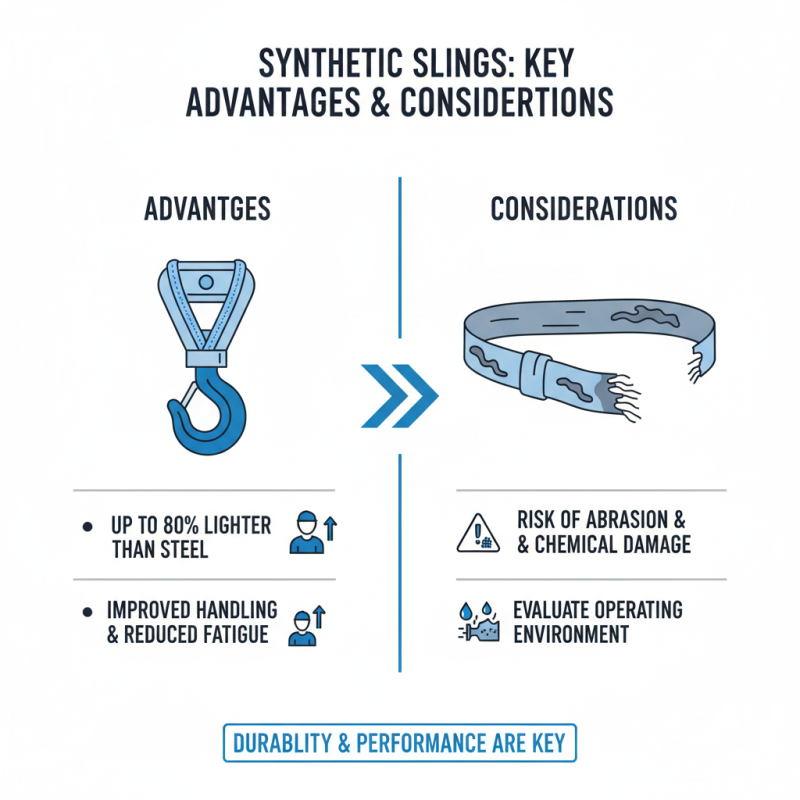
When considering synthetic slings, durability and performance are key factors. A recent industry report stated that synthetic slings can be up to 80% lighter than their steel counterparts. This weight reduction can significantly improve handling and reduce worker fatigue. However, the trade-off lies in the potential for abrasion and chemical damage. Users must thoroughly evaluate the operating environment.
The top options in the market offer a wide range of load capacities. Some handle loads up to 30 tons, making them suitable for heavy-duty applications. Yet, not all products withstand extreme conditions equally. Hot environments can weaken synthetic fibers. Regular inspection is crucial to maintaining sling integrity. Pay attention to wear and tear when selecting your sling.
Tip: Store slings in a dry, shaded place to prolong their lifespan. Avoid exposing them to direct sunlight whenever possible. Additionally, consider using protective sleeves to prevent cuts and abrasions. These small changes can enhance performance significantly. Always refer to the manufacturer’s guidelines for maximum load specifications and safety recommendations.
Performance Testing: How to Evaluate Sling Durability and Safety
When selecting synthetic slings, performance testing is crucial. Assessing durability and safety ensures reliability under load. A recent industry report indicated that synthetic slings can endure over 80% of their rated capacity. However, real-world conditions can impact performance. Environmental factors, such as UV exposure and abrasion, may weaken slings over time.
Tips: Regularly inspect slings for wear or damage. Look for fraying or discoloration. Replace them at the first sign of issues. It's vital to consider the working load limit (WLL) during your evaluation. Testing slings under controlled conditions can mimic real-life experiences.
Understanding the limits of synthetic materials is essential. A study highlighted that while these slings are strong, they can fail under excessive strain or sharp edges. Don't assume that the highest rated sling is the safest choice. Each application requires different considerations. Avoid overloading and always adhere to the manufacturer's guidelines.
Maintenance Tips for Prolonging the Life of Synthetic Slings
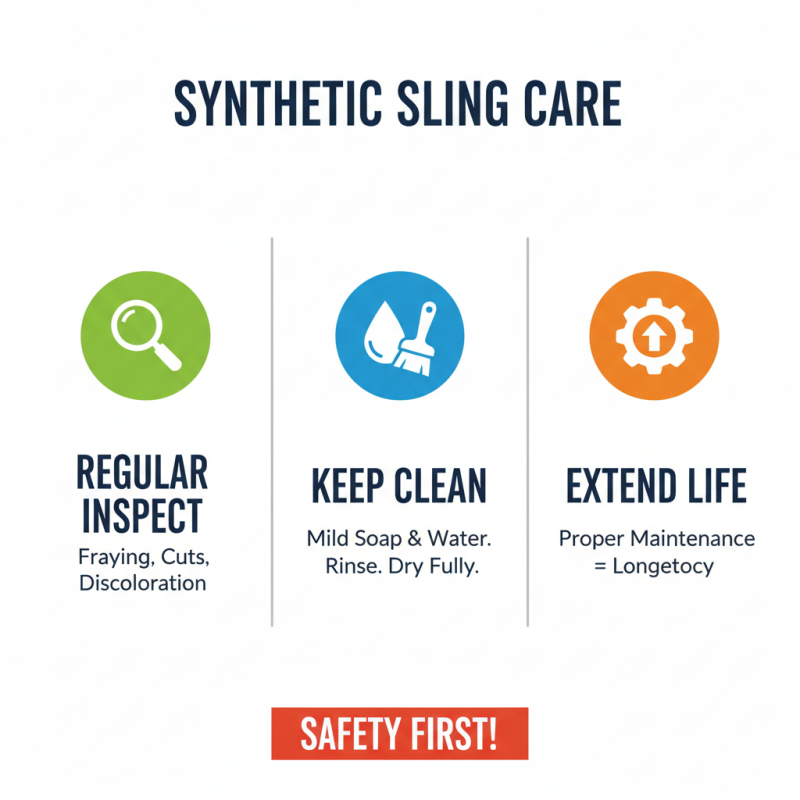
Proper maintenance is essential for extending the life of synthetic slings. Regular inspections are necessary to check for fraying, cuts, or discoloration. Even small signs of wear can lead to failure. Keep your slings clean. Dirt and debris can weaken the fibers over time. Use mild soap and water for cleaning. Rinse thoroughly and let them dry completely before storing.
Storing slings properly is also critical. Avoid exposing them to direct sunlight or harsh chemicals. A cool, dry place is ideal. When not in use, hang slings loosely. This prevents kinks or excessive bending. Double-check the storage environment regularly. High humidity can lead to mold growth, which can damage the material.
Handling slings with care is important too. Avoid dragging them along rough surfaces. This practice can cause unseen wear. Instead, lift the sling carefully to avoid friction. Be mindful of the weight limits. Exceeding them even occasionally may reduce the sling's lifespan dramatically. Taking these small steps can make a big difference.