Leave Your Message


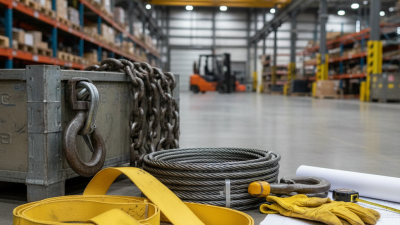
Choosing the right Lifting Sling is not simply a matter of selecting the strongest-looking option. Global buyers must match sling design, working load limit, lifting method, environment, and local requirements. A bright polyester web sling may suit machinery installation, while a wire rope sling can perform better around heat, abrasion, or sharp edges. Chain slings offer durability and adjustable configurations, but their weight and handling demands deserve attention.
Small details matter.
In practical lifting inspections, readable identification tags often reveal more than appearance. Buyers should check the working load limit, sling length, material, inspection status, and manufacturer information before purchase. Standards such as EN 1492-1 and ASME B30.9 can support quality assessment, yet regional rules and site procedures may still differ. A reliable supplier should provide traceable documentation, clear care instructions, and realistic safety guidance instead of vague promises.
No single sling type is best for every lift. The correct choice depends on load shape, edge conditions, temperature, chemical exposure, and connection points. Even experienced teams can overlook uneven loading or hidden damage beneath protective sleeves. That is why selection should include a careful risk review and regular inspection plan. This guide compares common sling types for international buyers, including their advantages, limitations, and practical applications. Some recommendations may need adjustment after a site assessment. That is not a weakness. It is responsible lifting practice.

Choosing a lifting sling starts with the load, not the catalogue. Polyester webbing is flexible, light, and gentle on painted surfaces. Wire rope handles abrasion and heat better, but it can kink or develop broken wires. Chain slings suit sharp edges, high temperatures, and repeated industrial work. They feel heavy. Each material needs a rated working load limit, or WLL, matched to the lifting arrangement.
Sling design changes how force reaches the load. An endless sling wraps around an object, while a flat eye-and-eye sling supports direct or choker configurations. Basket hitches can increase capacity, but the load must remain balanced between the sling legs. At low sling angles, tension rises quickly. A two-leg sling at 30 degrees from horizontal creates much higher tension than many new buyers expect. Protective sleeves reduce cutting risk, though they cannot repair damaged fibers.
During practical inspections, I check tags, stitching, hooks, links, and contact points before every lift. Sunlight, chemicals, heat, and sharp edges can weaken a sling without obvious warning. Never rely on color alone; markings and technical data control the decision. That detail is easy to miss. Honestly, a neat-looking sling can still be unsafe after internal damage or overload. Global buyers should request traceable inspection records and confirm local requirements. Competent personnel should select the hitch, calculate the load, and keep people outside the danger zone.
| Sling Type | Primary Material | Typical Design | Working Principle | Typical Working Load Limit Range* | Main Advantages | Main Limitations | Best-Fit Applications | Common Reference Standards |
|---|---|---|---|---|---|---|---|---|
| Flat Webbing Sling | High-tenacity polyester webbing | Single-layer or multi-layer woven webbing with reinforced eyes | Wide, flexible webbing distributes contact pressure around the load and carries tension through woven fibers. | Approximately 1–20 metric tonnes, depending on width, layers, hitch, and angle | Lightweight, flexible, easy to store, low surface marking, and economical for general lifting | Can be cut by sharp edges; vulnerable to abrasion, heat, molten metal, and some chemicals | Machinery, painted components, packaged goods, maintenance work, and general cargo | EN 1492-1; ASME B30.9 |
| Round Sling | Continuous polyester load-bearing yarns with a protective cover | Endless loop formed by yarns enclosed in a tubular sleeve | The internal yarns share the load around the full circumference, allowing the sling to conform closely to irregular shapes. | Approximately 1–100 metric tonnes, with larger capacities available for engineered systems | Excellent flexibility, good load conformity, low weight, and easy use in basket or choker hitches | The cover may hide internal damage; susceptible to cuts, abrasion, high temperature, and incompatible chemicals | Irregular loads, delicate surfaces, steel fabrication, machinery installation, and tandem lifting | EN 1492-2; ASME B30.9 |
| Wire Rope Sling | Galvanized or ungalvanized steel wire rope | One or more wire-rope legs with eyes, sockets, thimbles, or mechanical fittings | Multiple steel wires and strands share tensile force while maintaining high resistance to abrasion and heat. | Approximately 2–100 metric tonnes, based on rope diameter, construction, number of legs, and hitch | High strength, strong abrasion resistance, good durability, and suitable for many industrial environments | Heavy, less flexible than textile slings, may damage finished surfaces, and can develop broken wires or corrosion | Construction, shipyards, offshore work, steel handling, and heavy industrial lifting | EN 13414-1; ASME B30.9 |
| Alloy Steel Chain Sling | Grade 80 or Grade 100 alloy steel chain and fittings | Single- or multi-leg chain assembly with hooks, master links, and shortening devices | Heat-treated chain links carry tensile force and allow length adjustment for balanced, irregular, or sharp-edged loads. | Approximately 1–50 metric tonnes, depending on chain diameter, grade, leg count, and hitch angle | Highly adjustable, durable, resistant to abrasion, and suitable for hot or rugged environments within rated limits | Heavy, may scratch loads, requires protection from shock loading, and must be checked for stretched or damaged links | Foundries, steel plants, heavy fabrication, machinery, and loads with designated lifting points | EN 818-2; ASME B30.9 |
| High-Performance Synthetic Sling | High-modulus polyethylene or aramid fiber, with a protective cover | Lightweight endless or eye-and-eye sling with engineered core and abrasion-resistant cover | High-strength fibers carry tensile loads while the cover protects the core from abrasion and handling damage. | Approximately 10–500 metric tonnes for engineered lifting systems | Very high strength-to-weight ratio, easier manual handling than steel alternatives, and reduced load contact pressure | Requires specialized inspection, can be sensitive to heat or ultraviolet exposure depending on fiber, and usually costs more | Offshore lifting, wind-energy components, heavy modular assemblies, and weight-sensitive operations | Applicable manufacturer specifications and project-specific lifting standards |
| Adjustable Multi-Leg Sling | Chain, wire rope, or synthetic sling legs with rated hardware | Two-, three-, or four-leg assembly connected to a master link or lifting ring | Several legs share the load, but the force in each leg increases as the included angle becomes wider. | Approximately 2–100 metric tonnes, depending on leg material, configuration, and included angle | Useful for balanced loads, multiple lifting points, and adjustable load geometry | Uneven load distribution and excessive sling angles can significantly reduce the safe working capacity | Large frames, tanks, structural assemblies, containers, and loads with multiple certified lifting lugs | ASME B30.9; applicable EN sling and lifting-accessory standards |