Best Polyester Webbing Options for Global Buyers?
The global demand for strong and durable materials has brought polyester webbing into the spotlight. Experts note its widespread use in various industries, from outdoor gear to safety applications. John Anderson, a leading figure in the textile industry, once stated, “Polyester webbing stands out for its strength and versatility.”
In recent years, buyers have had to navigate a vast array of options and specifications. Choosing the right polyester webbing can be daunting. Multiple factors, such as weave type and load capacity, must be considered. Not every option may meet your specific needs. Testing samples or consulting with experienced suppliers helps avoid missteps.
As the market evolves, so do the technologies behind polyester webbing. Innovations have emerged, enhancing its durability and resistance to wear. However, not all brands offer the same quality. Scrutiny is essential to ensure you invest in reliable products. Understanding the nuances of polyester webbing will guide global buyers towards better purchasing decisions.
Best Types of Polyester Webbing: Strength and Durability Comparisons
When selecting polyester webbing, strength and durability are essential factors. High-quality polyester webbing typically features breaking strengths between 1,000 and 7,000 pounds. This strength varies based on the webbing's width and thickness. A 1-inch wide polyester webbing can typically endure loads of 1,500 to 3,000 pounds. Those higher figures indicate suitability for heavy-duty applications, like cargo securing and safety harnesses.
Durability is equally crucial. Polyester webbing excels in both UV resistance and low moisture absorption. According to a report from the Textile Research Journal, samples of polyester webbing retained about 90% of their strength after 200 hours of UV exposure. This is impressive compared to other materials. However, wear and tear from regular use can reduce lifespan. Users must consider factors such as abrasion resistance and environmental exposure.
While polyester is popular, not all options perform equally. Variations in manufacturing processes and materials can lead to inconsistencies. Some webbing types might tear easily under extreme conditions. This necessitates careful selection based on performance needs. Buyers should assess potential uses, ensuring the choice aligns with required specifications for both strength and durability.
Key Specifications That Matter: Breaking Strength and Load Capacity
When selecting polyester webbing, two key specifications stand out: breaking strength and load capacity.
Breaking strength refers to the maximum weight a webbing can support before failing. Typically, high-quality polyester webbing has a breaking strength ranging from 1,000 to over 10,000 pounds.
It varies based on the webbing width and construction. This strong baseline helps ensure safety, especially in demanding applications.
Load capacity is another crucial factor. It indicates how much weight the webbing can support during regular use. Industry standards often suggest a safety factor of 5:1.
This means that if the webbing has a breaking strength of 5,000 pounds, its safe working load should not exceed 1,000 pounds.
For example, emergency services or outdoor enthusiasts commonly use load capacities around this ratio for reliability and safety in unpredictable conditions.
However, not all polyester webbing is created equal. Variations in manufacturing processes can affect both breaking strength and load capacity.
Buyers must scrutinize technical data sheets and ask for certifications when available. Understanding these details helps ensure that the chosen webbing meets specific needs,
minimizing risks associated with weak links in a setup. It's essential to reflect on how these factors can impact performance in real-world scenarios.
Industry Standards for Polyester Webbing: ASTM and ISO Compliance
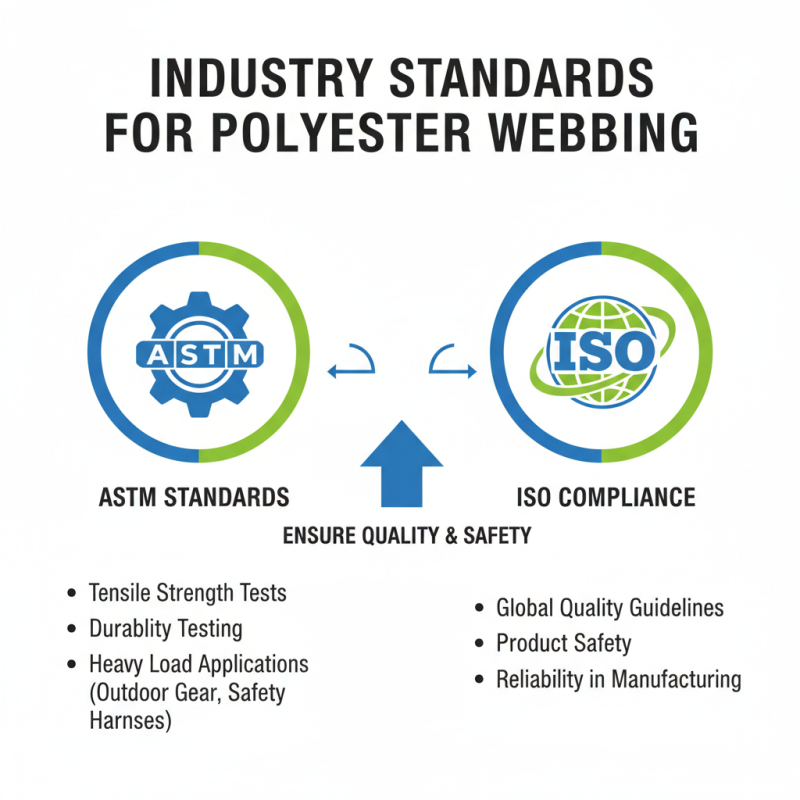
When selecting polyester webbing, understanding industry standards is crucial. Both ASTM and ISO provide guidelines that ensure the quality and safety of products. ASTM outlines specific tests for tensile strength and durability. These tests are vital for applications requiring heavy loads, like outdoor gear and safety harnesses.
ISO compliance further enhances the credibility of polyester webbing. It ensures consistency in manufacturing processes worldwide. Buyers can trust products that meet these standards. However, not all manufacturers prioritize compliance, leading to variability in quality.
Purchasers should be aware of these discrepancies. A webbing may appear robust but might not pass critical tests. Checking certifications is essential. Some sellers might provide incomplete information about their compliance status. Therefore, thorough research and verification are necessary for making informed decisions.
Sustainability Aspects: Eco-friendly Polyester Manufacturing Practices
Sustainability has become a crucial consideration in the manufacturing of polyester webbing. Eco-friendly practices are gaining attention among producers. These practices minimize environmental impacts throughout the production cycle. Techniques such as using recycled materials are becoming more common. Many manufacturers are investing in technology to enhance energy efficiency.
Water use is also a significant concern. Excessive water consumption during production can harm local ecosystems. Some companies are adopting closed-loop systems that recycle water. These systems not only conserve resources but also reduce pollution. Additionally, innovations in dyeing processes are reducing harmful chemical uses. Water-based inks and dyes are emerging as greener alternatives, making the production less toxic.
However, the race for sustainability isn't without challenges. Not all manufacturers adopt eco-friendly practices uniformly. Some still rely heavily on conventional methods that harm the environment. Buyers must be aware of these discrepancies. Choosing suppliers committed to eco-friendly practices ensures better choices for the planet. It's a journey toward greater sustainability, with room for improvement along the way.
Best Polyester Webbing Options for Global Buyers
Global Market Trends: Demand and Supply Dynamics in Polyester Webbing
The global market for polyester webbing is evolving rapidly. Demand is shifting as industries recognize the benefits of durability and versatility. This material is essential in various applications, from outdoor gear to safety harnesses. Enhanced manufacturing processes have led to higher quality products. However, inconsistencies in supply chain logistics can create unpredictable availability.
Recent trends indicate a surge in eco-conscious consumers. They prefer products made from recycled polyester. This shift is challenging manufacturers to innovate while maintaining standards. Some buyers find it hard to source reliable options. They often face quality issues when exploring new suppliers. Small-to-medium enterprises may struggle with scalability.
Manufacturers must address these dynamics to thrive. Building relationships with suppliers can mitigate risks in sourcing. Transparency in production processes is vital. Stakeholders seek assurance regarding the quality of materials. As the market continues to grow, adaptability and commitment to improvement will be crucial. Companies should consider sustainability to stay competitive.