How to Choose the Right Synthetic Sling?
Choosing the right Synthetic Sling is a safety decision, not a simple purchasing task. The correct choice depends on load weight, shape, lifting angle, surface condition, temperature, and handling method. A bright label does not guarantee a safe lift. The details matter.
Reports from Grand View Research and MarketsandMarkets identify construction, manufacturing, energy, and logistics as major growth areas for lifting equipment. Their findings also show rising demand for lightweight, flexible lifting solutions. Synthetic slings fit this trend because they are easier to handle than many steel alternatives. However, market growth does not remove the need for careful selection. OSHA 29 CFR 1910.184 requires employers to inspect synthetic web slings before use and follow marked rated capacities. ASME B30.9 also provides recognized guidance for sling inspection, use, and removal from service.
Mike Parnell, a respected lifting-equipment trainer and author, states, “The sling is only one part of the lifting system.” That sentence deserves attention. A sling can be correctly rated yet poorly used. An edge can cut it. Heat can weaken it. An extreme angle can increase tension sharply.
Start with the real working conditions. Confirm the sling’s material, configuration, working load limit, hitch type, and protection needs. Polyester may suit many general lifting tasks, while specialized fibers may perform better in selected environments. Do not guess.
The label is not enough.
A practical selection process should also consider inspection records, operator training, storage, and replacement criteria. This is where many buying guides become too neat. Real workplaces are messier. The safest choice comes from matching verified data with honest site experience.
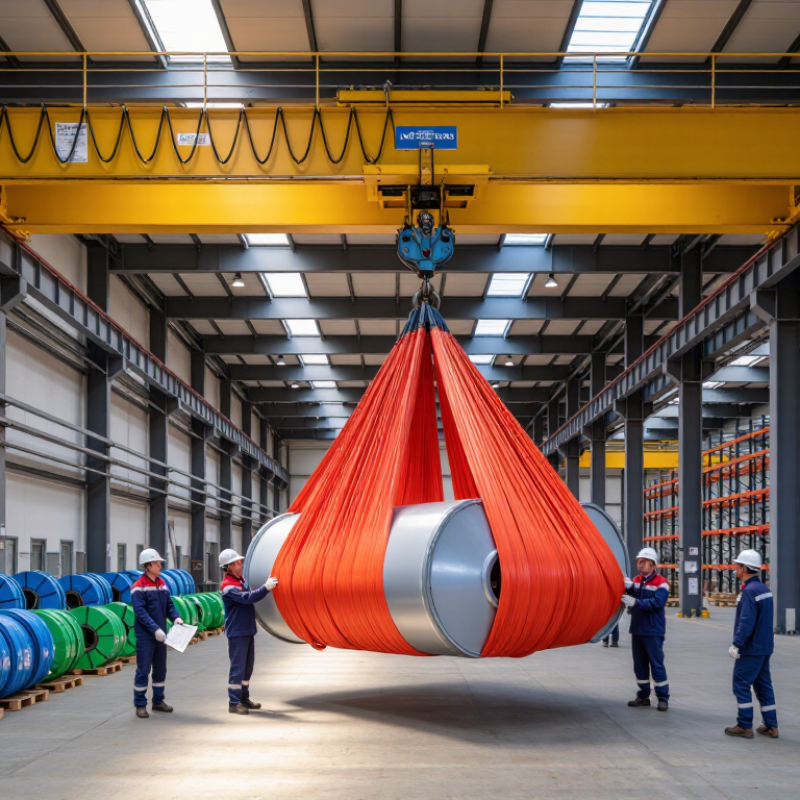
Define Synthetic Sling Types and the 5:1 Design-Factor Baseline
How to Choose the Right Synthetic Sling?
Define Synthetic Sling Types and the 5:1 Design-Factor Baseline
Choosing starts with identifying sling construction, not color or width. Webbing slings are flat, flexible, and useful around painted surfaces. Roundslings contain load-bearing fibers inside a protective jacket. Endless slings form continuous loops. Eye-and-eye slings provide defined attachment points. Basket and choker hitches change capacity. Material also matters. Polyester stretches less and suits many industrial conditions. Nylon can absorb more energy, but moisture and chemicals may affect performance. High-modulus fibers can be very strong, yet they still need protection. Check the label, traceability, hitch type, and work environment before selecting one. Guesswork is expensive.
The key baseline is the 5:1 design factor. It means minimum breaking strength is five times the rated working load limit under stated conditions. A 2,000-kilogram WLL requires at least 10,000 kilograms of minimum breaking strength. This ratio does not permit lifting beyond the marked WLL. Angles, sharp edges, heat, knots, abrasion, and hardware can reduce capacity. A sharp beam edge can cut fibers quickly. Use edge protection and keep the sling aligned. Never shorten it with a knot. Inspect for cuts, melted areas, crushed fibers, chemical damage, and missing identification. A competent person should verify calculations against applicable standards and technical data. The 5:1 baseline helps, but it is not the whole decision. I still recheck assumptions when a load shape is awkward. Small details matter.
Match WLL to Load Weight Using ASME B30.9 Rating Tables
How to Choose the Right Synthetic Sling?
Choosing a synthetic sling starts with the load’s actual weight. Do not estimate from appearance. Weigh the load when possible, including fixtures, water, and loose components. Then compare that weight with the Working Load Limit (WLL) in the applicable ASME B30.9 rating table. The table must match the sling material, construction, and hitch. A vertical hitch, basket hitch, and choker hitch can have different capacities. The same sling may lift more in a basket configuration, but only when the load remains balanced and fully supported.
Angle changes the calculation. In a basket hitch, low sling angles create higher leg tension. At 30 degrees from horizontal, each leg carries much more force than at 60 degrees. Use the table and approved calculation method, not a quick visual check. Inspect for cuts, melted fibers, chemical damage, pulled stitching, and crushed sections. Remove questionable slings from service. Immediately.
Clearance also matters. Sharp corners can slice webbing, even when the load weight seems acceptable. Use proper corner protection and keep the sling centered. Avoid shock loading, dragging, or sudden crane movement. A common field mistake is treating WLL as a permanent number. It is not. Configuration, angle, condition, and contact with the load can change the safe capacity. Recheck the current ASME guidance and site procedures before each lift. When the table does not clearly fit the situation, stop and obtain qualified lifting advice. Guessing saves seconds, until it does not.
Adjust Capacity for Hitch Geometry and Angles: 60° Is a Key Limit
Choosing the right synthetic sling starts with the hitch, not the sling color or width.
Confirm the working load limit for the exact hitch configuration. A vertical lift, choker hitch, and basket hitch have different capacities. The same sling can perform very differently in each arrangement.
The 60-degree figure is easy to misuse.
Measure the sling angle clearly, preferably from the horizontal, and record that reference. At 60 degrees from horizontal, each leg carries a significant share of the load. As the angle drops, leg tension rises quickly. Below 30 degrees from horizontal, many lifting guides prohibit the arrangement or require specific engineering approval. Never treat 60 degrees as a universal capacity rating. Check the manufacturer’s chart and the sling tag.
Geometry matters on the worksite.
A tight corner, uneven load, or shifted center of gravity can overload one leg. Place the sling evenly beneath the load, protect it from sharp edges, and keep the load balanced before tensioning. I have seen apparently simple lifts become unstable after one side lifted first. That mistake is preventable, but it requires a pause. Inspect for cuts, heat damage, crushed fibers, and distorted hardware. If the angle, hitch, or load weight is uncertain, stop the lift and ask a qualified lifting professional. Guessing is not a control method.
Verify OSHA Marking, Inspection Criteria, and Removal-from-Service Rules
Choosing the right synthetic sling begins with its identification tag, not its color or appearance. OSHA 29 CFR 1910.184 requires durable markings showing the manufacturer, rated capacities, and sling material. The tag should identify capacities for vertical, choker, and basket hitches, when applicable. Confirm those ratings against the load weight, hitch angle, and lifting plan. If the tag is missing, unreadable, or altered, do not guess. Quarantine it. OSHA requires synthetic web slings to be inspected before use on each shift. Defective slings must be removed from service immediately.
Inspect the full length under good lighting. Look for cuts, snags, chemical damage, melted fibers, broken stitching, distorted fittings, and exposed core yarns. Sharp edges require suitable protection; a compliant tag cannot restore damaged fibers. ASME B30.9-2023 supports documented periodic inspections, generally at least annually, with shorter intervals for severe or frequent service. The U.S. Bureau of Labor Statistics reported 5,283 fatal occupational injuries in 2023, although its Census does not isolate sling failures. That limitation matters. Local inspection records often reveal risks national reports cannot show. Mark rejected slings clearly and prevent accidental reuse under the employer’s removal procedure. An honest weakness remains: hurried inspections can become routine paperwork. A second trained person may notice what the first misses.