Choosing the top Lifting Sling manufacturers is not simply a matter of comparing prices or catalog sizes. A reliable supplier must demonstrate consistent product quality, accurate working load limits, traceable materials, and disciplined inspection procedures. Every detail matters, from the stitching around an eye loop to the label attached beside the rated capacity. A lifting sling may look identical to another, yet perform very differently under abrasion, sharp edges, moisture, or repeated loading.
Rigging educator Mike Parnell has stated, “Rigging is a skill, not a commodity.” This principle guides the evaluation in this article. The leading manufacturers are assessed through practical criteria, including fiber selection, webbing strength, safety testing, certification, customization, and technical support. Their performance also depends on how clearly they explain inspection requirements and retirement conditions. A polished brochure proves little. Field experience matters more.
No ranking is permanent. Manufacturing records change, and regional service can affect the final choice. Some companies excel at synthetic web slings, while others focus on wire rope, round slings, or heavy industrial lifting systems. Buyers should still verify current certificates, capacity markings, and inspection documentation before purchase. That step is easy to overlook. It should not be.
This guide introduces the manufacturers that deserve closer attention and explains where each may fit. The goal is not to declare one universal winner. It is to support safer, more informed decisions.
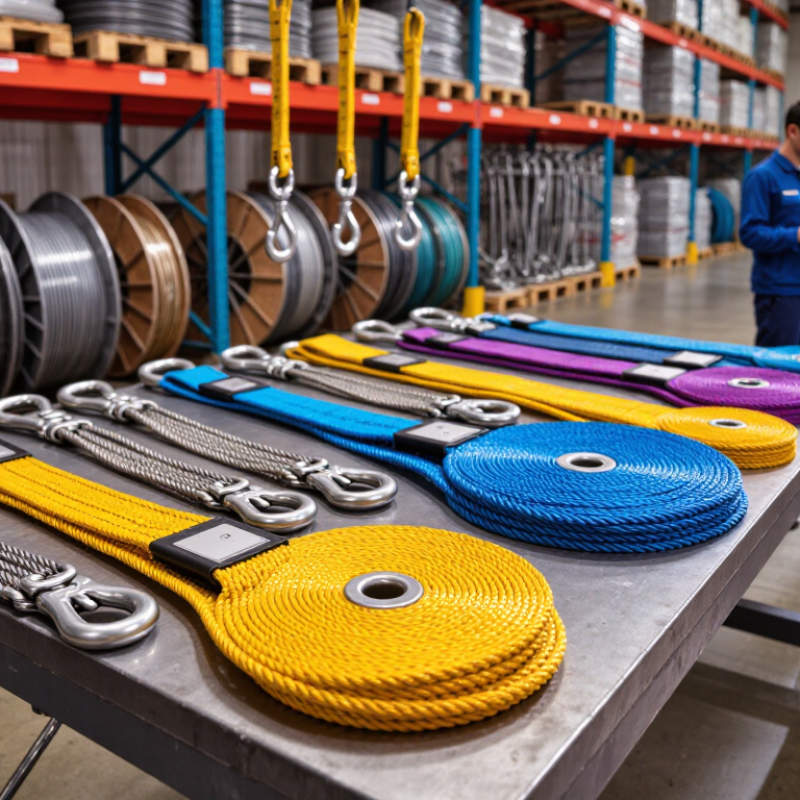
Lifting slings are flexible load-bearing devices used to connect cranes, hoists, and suspended loads. They are usually made from synthetic webbing, wire rope, or chain. Each material behaves differently under pressure, abrasion, heat, and moisture. Experienced riggers select a sling by checking its working load limit, length, configuration, and visible condition. A strong sling is not automatically suitable for every lift.
Synthetic web slings are lightweight and gentle on painted or polished surfaces. Round slings offer flexibility and can wrap around unusual shapes. Wire rope slings resist abrasion and perform well in demanding industrial areas.
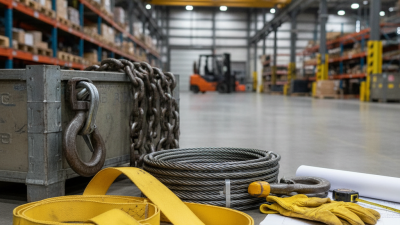
Chain slings tolerate heat and sharp edges, but they are heavier and require careful inspection. Common applications include construction beams, machinery installation, shipyard handling, warehouse movement, and maintenance work. The lifting angle matters. A shallow angle can increase tension significantly. That detail is often underestimated.
Tips: Read the identification tag before use. Confirm the load weight and lifting points. Protect slings from sharp corners with suitable padding. Look for cuts, broken wires, stretched links, burns, chemical damage, or distorted hardware. Keep people away from suspended loads. Never guess a sling’s capacity from appearance. I have seen clean-looking equipment fail after hidden damage was ignored. Inspection routines are useful, but they are not perfect. Conditions change, and experienced teams still need to pause, question the setup, and replace uncertain equipment.
What Are the Top Lifting Sling Manufacturers?
Choosing a lifting sling manufacturer requires more than comparing prices or catalog sizes. A reliable manufacturer should provide clear working load limits, material details, and traceable product identification. Each sling should match the intended load, lifting angle, environment, and connection method. Small details matter. A missing label can create serious uncertainty during a busy lifting operation.
Key Standards for Evaluating Lifting Sling Manufacturers
Look for documented quality systems, controlled stitching processes, and inspection records. Manufacturers should explain how they test webbing, wire rope, or chain slings before shipment. Certificates must be consistent with the product supplied, not copied from a general product file. Relevant standards and local workplace requirements should be clearly addressed. Experienced manufacturers also provide instructions for inspection, storage, cleaning, and retirement. In practice, no supplier is perfect. Documentation may look professional but still needs careful checking.
Tips: Ask for sample certificates, production traceability, and inspection procedures. Check whether the stated working load limit changes with sling configuration. Examine stitching, fittings, edge protection, and identification tags. Request guidance for damaged equipment. A useful question is simple: “What evidence supports this rating?” Test the response.
| Evaluation Dimension | Recognized Standard or Regulation | Factual Benchmark | Evidence to Request from a Manufacturer | Why It Matters |
|---|---|---|---|---|
| Product Scope and Sling Type | EN 1492-1; EN 1492-2; ASME B30.9 | The manufacturer should clearly identify whether the product is a flat woven webbing sling, endless sling, eye-and-eye sling, or round sling. | Product specification, construction description, sling type, applicable standard, and intended lifting applications. | Different sling constructions have different load capacities, inspection requirements, and limitations. |
| Working Load Limit and Rated Capacity | OSHA 29 CFR 1910.184; ASME B30.9; EN 1492 series | Rated capacity should be stated for the applicable hitch configuration, including vertical, choker, basket, and relevant angle conditions. | Capacity charts, angle-factor tables, hitch-specific ratings, and technical calculation methods. | Working Load Limit changes with the hitch type, sling angle, and configuration. A single capacity figure can be misleading. |
| Permanent Product Identification | OSHA 29 CFR 1910.184; ASME B30.9 | Identification should remain legible and should include information such as rated capacities, length, material, and manufacturer or responsible supplier identification where required. | Photographs of labels, identification tags, traceability procedure, and marking durability information. | Operators must be able to verify the correct sling and its capacity before use. |
| Material and Construction | EN 1492-1; EN 1492-2; ASME B30.9 | The manufacturer should declare the webbing or rope material, stitching method, protective sleeves, fittings, and compatibility limitations. | Material declaration, yarn or webbing specification, stitching details, fitting material, and technical drawings. | Polyester, nylon, and other materials differ in chemical resistance, elongation, moisture behavior, and temperature limitations. |
| Safety Factor and Design Basis | Applicable EN 1492 part; ASME B30.9; applicable national regulations | The supplier should state the design basis and safety factor required by the applicable product standard rather than presenting an unsupported rating. | Design calculations, standard clause references, engineering approval, and declared minimum breaking force where applicable. | A transparent design basis supports consistent capacity ratings and avoids comparing products using incompatible methods. |
| Testing and Quality Verification | Applicable product standard and documented quality system | Testing should cover relevant dimensions, material properties, stitching or construction quality, and load performance required by the selected standard. | Test reports, sampling plan, calibration records, laboratory qualifications, and batch-release records. | Independent and traceable testing provides stronger evidence than a general statement that a product is “tested.” |
| Inspection Before Use | OSHA 29 CFR 1910.184; ASME B30.9 | Slings should be inspected before use, with additional inspections determined by service conditions and usage frequency. | Inspection checklist, user instructions, inspection frequency guidance, and examples of acceptable and unacceptable damage. | Regular inspection helps identify damage before a sling is placed under load. |
| Removal-from-Service Criteria | OSHA 29 CFR 1910.184; ASME B30.9 | Removal criteria should address cuts, tears, punctures, abrasion, damaged stitching, melting, charring, chemical damage, distorted fittings, and illegible identification. | Documented rejection criteria, illustrated inspection guide, quarantine procedure, and disposal or repair policy. | Clear rejection criteria reduce the risk of unsafe judgment calls by operators and inspectors. |
| Temperature and Chemical Compatibility | Material manufacturer data; EN 1492 series; ASME B30.9 | The supplier should publish operating limitations for heat, cold, acids, alkalis, solvents, ultraviolet exposure, and moisture where relevant. | Chemical compatibility chart, temperature range, environmental limitations, and care instructions. | Textile slings can lose strength or suffer hidden damage when exposed to unsuitable chemicals or temperatures. |
| Protection Against Sharp Edges | ASME B30.9; manufacturer instructions | Protective sleeves, corner guards, or other suitable methods should be specified when the sling may contact sharp or abrasive edges. | Edge-protection recommendations, sleeve specifications, abrasion data, and instructions for load contact points. | Even a correctly rated sling can be cut or severely abraded by an unprotected sharp edge. |
| User Instructions and Training Support | OSHA 29 CFR 1910.184; ASME B30.9 | Instructions should explain selection, rigging, hitch configuration, angle effects, inspection, storage, and conditions requiring removal from service. | Operating manual, installation or rigging guide, training materials, warning labels, and multilingual documentation where needed. | Correct use depends on both product quality and the operator’s understanding of safe lifting practices. |
| Traceability and Batch Control | Quality-management procedures; applicable product standard | Each sling should be traceable to a production batch, material source, inspection record, and release decision. | Serial-number system, batch certificates, raw-material records, nonconformance procedure, and recall process. | Traceability supports targeted corrective action and verification of product history. |
| Fittings and Hardware Compatibility | ASME B30.9; applicable hardware standard | Hooks, links, shackles, and other fittings should be compatible with the sling’s rated capacity and geometry. | Hardware specifications, proof-test documentation where applicable, compatibility limits, and fitting inspection criteria. | An incompatible or damaged fitting can become the weakest component in the lifting system. |
| Repair and Reuse Policy | OSHA 29 CFR 1910.184; ASME B30.9 | Repair, alteration, or re-rating should only be permitted when allowed by the applicable standard and controlled by a competent authority. | Repair authorization process, approved repair methods, reinspection requirements, and rules for relabeling. | Uncontrolled repairs can hide damage or invalidate the original capacity rating. |
| Storage and Service Life Guidance | ASME B30.9; manufacturer instructions | Storage guidance should protect slings from moisture, ultraviolet radiation, chemicals, sharp objects, pests, and unnecessary mechanical damage. | Storage instructions, cleaning procedures, service-life guidance, and recommendations for environmental exposure. | Proper storage helps preserve textile strength and keeps identification readable. |
| Compliance Documentation | Applicable national and regional requirements | Documents should identify the applicable standard, product type, rated capacity, manufacturing information, and responsible party. | Declaration of conformity where applicable, certificate of conformity, inspection records, test reports, and technical file index. | Complete documentation makes procurement audits, site acceptance, and regulatory checks more reliable. |
| Supplier Quality Consistency | Documented quality-management system | The manufacturer should demonstrate controlled purchasing, production inspection, final inspection, nonconformance handling, and corrective action. | Quality manual, process-control plan, audit records, calibration system, complaint statistics, and corrective-action examples. | Consistent processes are essential when slings are purchased repeatedly or in large quantities. |
| Overall Qualification Result | Combined review of standards, evidence, and application requirements | Suitable for Further Approval | Complete technical submittal, satisfactory sample inspection, verified documentation, and successful application-specific review. | A manufacturer should be evaluated against the intended lifting environment rather than by price or general product claims alone. |

Leading lifting sling manufacturers differ less by catalog size than by engineering discipline. A 2024 Grand View Research report estimates the global material handling equipment market at about USD 216.7 billion in 2023, with continued growth through 2030. This expansion increases demand for traceable, application-specific lifting products. However, market growth does not automatically prove product quality.
Synthetic webbing manufacturers usually excel in lightweight handling and surface protection. Their strongest products often include polyester web slings, endless round slings, and protective sleeves.
Wire-rope manufacturers offer better resistance to abrasion, heat, and repeated heavy lifting. Chain-sling producers focus on ruggedness, adjustable leg lengths, and harsh industrial environments.
Each product should show a clear working load limit, length, material, inspection status, and batch traceability.
Standards matter greatly. EN 1492-1 and EN 1492-2 address textile slings, while ASME B30.9 provides widely used sling guidance. Field inspections commonly find damaged stitching, crushed fibers, distorted fittings, and unreadable labels. Small defects can become serious failures. Buyers should request proof-testing records and inspect replacement procedures, not only certificates. Price still influences decisions. It should not lead them. A neat document file is not proof of reliable lifting practice. No manufacturer is strongest in every application, and this comparison remains imperfect without load history, environmental conditions, and operator feedback.
Top lifting sling manufacturers distinguish themselves through controlled production, not attractive catalogs. A typical web sling begins with high-tenacity polyester yarn, selected for strength, abrasion resistance, and stable elongation. The yarn is woven on calibrated looms, where tension affects width, thickness, and final load behavior. Operators inspect the weave for broken strands, loose edges, and uneven stitching. Small flaws matter.
End fittings and eyes receive reinforced stitching with thread compatible with the sling material. Some factories use protective sleeves at contact points, especially where sharp corners or hot surfaces may damage fibers. Each sling should carry readable identification showing rated capacity, length, material, and traceable batch information. Quality control should combine visual checks, dimensional measurements, and proof testing on selected samples. A proof test is not a substitute for sound design.
Reliable manufacturers maintain calibration records for load frames, sewing machines, and measuring tools. They also quarantine nonconforming products instead of quietly repairing every defect. In practical audits, I look for clean work areas, controlled storage, and records matching the label. One weakness remains common: inspection notes may be detailed, but corrective actions are vague. That gap deserves attention. Manufacturing quality improves when test results change production settings, worker training, and supplier selection.
What Are the Top Lifting Sling Manufacturers?
How to Select the Right Lifting Sling Manufacturer
Choosing a lifting sling manufacturer requires more than comparing catalog prices. Check how the manufacturer controls fibers, webbing, stitching, fittings, and final inspection. A reliable supplier should explain its rated capacity clearly. The rating must match sling type, lifting angle, hitch method, and environmental conditions. Ask for test records, material traceability, inspection procedures, and current technical documents. Vague answers deserve caution.
Visit the production facility when practical. Look for clean work areas, calibrated testing equipment, controlled stitching, and trained inspectors. Examine how each sling receives identification markings. These markings should remain readable after normal handling. Request samples showing edge protection and reinforced eyes. Small details matter. A loose stitch can become a serious weakness during repeated use.
Experience also comes from how a manufacturer handles unusual applications. Discuss sharp edges, heat, moisture, chemicals, limited headroom, and frequent lifting cycles. The right manufacturer will ask questions before recommending a product. It may suggest a different fiber, coating, length, or protective sleeve. Do not accept impressive claims without evidence. I have seen buyers focus too heavily on price, then discover that replacement costs were higher. That mistake is easy to repeat. A strong supplier also provides practical guidance for inspection, storage, retirement, and operator training. Still, no manufacturer can replace competent lifting planning at the worksite.
This chart uses the standard two-leg sling relationship: load per leg equals total load divided by two times the sine of the sling angle measured from horizontal. As the angle decreases, leg tension increases. When selecting a lifting sling manufacturer, verify that published working load limits, angle ratings, inspection guidance, and certification documents clearly address the intended lifting configuration.