Leave Your Message

What Are the Top Ratchet Straps for Global Buyers in 2026?

Choosing the right Ratchet Straps in 2026 requires more than comparing prices. Global buyers must examine webbing strength, hook design, working load limit, corrosion resistance, and traceable manufacturing quality. A strap that looks robust may still fail under heat, abrasion, or repeated tensioning. That detail is easy to miss.

Cargo-securement specialist Gary Thomas says, “A ratchet strap is only as reliable as its rated capacity, condition, and correct use.” This principle shapes our review. We will compare Ratchet Straps for freight carriers, warehouse teams, manufacturers, outdoor suppliers, and international distributors. Each category faces different pressures. A flatbed hauler may need long webbing and durable edge protection. A warehouse operator may value compact storage and fast release. Coastal users need hardware that tolerates salty air.

The strongest option is not automatically the best option. Overbuilt straps can add cost, weight, and unnecessary handling time. Low-cost models can create hidden replacement expenses. We will consider both performance and practical ownership. Tests may reveal weaknesses that product pages do not mention. Buckles can jam. Stitching can look uneven. Labels can fade after sunlight exposure.

This guide also recognizes uncertainty. Supplier claims deserve verification. Certification language can vary between markets. Buyers should confirm working load limits, inspection procedures, packaging details, and after-sales support before ordering. The ranking may not fit every shipment. Still, it offers a clear starting point for choosing dependable Ratchet Straps in a demanding global market.
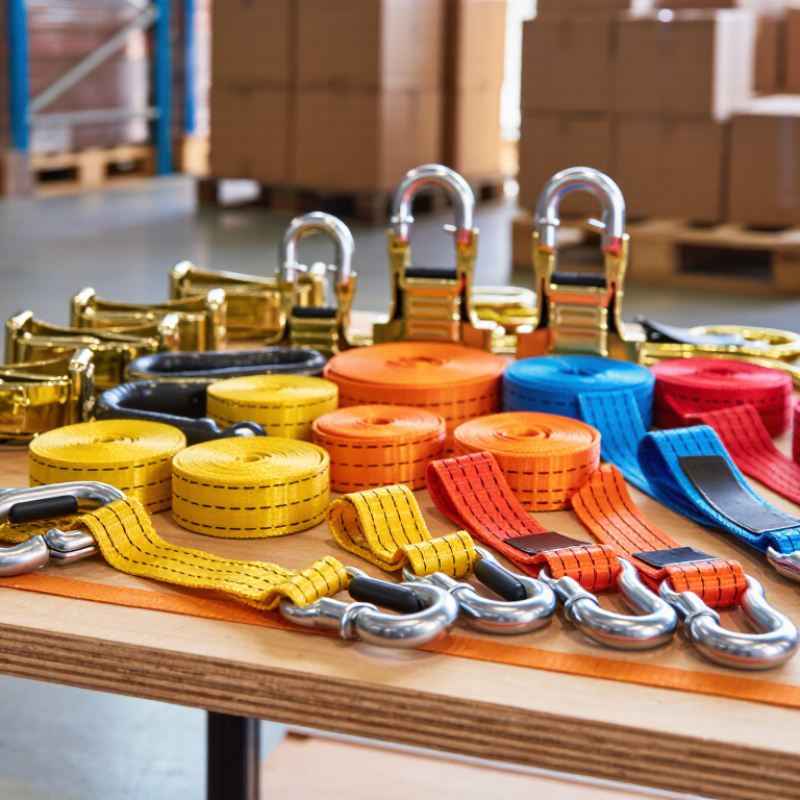
What Are the Top Ratchet Straps for Global Buyers in 2026?

How EN 12195-2 Defines LC, STF, and the 2:1 Safety Factor

What Are the Top Ratchet Straps for Global Buyers in 2026?

For global buyers, EN 12195-2 matters more than strap color or webbing width. It defines key values used to assess load restraint performance. LC means Lashing Capacity, or the maximum permitted force carried by the strap during restraint. It is normally shown in daN on the label.

STF means Standard Tension Force. It describes the residual force created by the ratchet tensioner after tightening. Higher STF can improve friction between cargo and the loading surface. However, it depends on correct handling, contact conditions, and the real cargo arrangement. A printed number is not enough.

The 2:1 safety factor connects LC with the webbing’s minimum breaking force. For common webbing lashings, LC should not exceed half of that breaking force. This margin helps account for working conditions, but it does not make poor securing safe. It is not permission to overload one strap.

Check the label carefully.

Look for LC, STF, length, and standard references. Inspect stitching, hooks, edge damage, and ratchet movement before use. I have seen buyers compare only width and price. That shortcut can fail. A wider strap may still have unsuitable fittings or unclear test records. Purchase documents should match the marked values, and qualified personnel should verify the securing calculation for each cargo shape and weight.
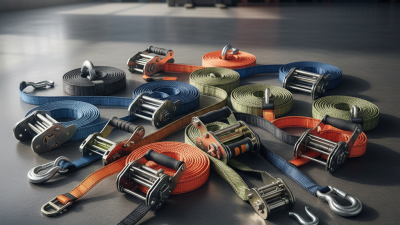
Why Polyester Webbing Dominates Ratchet Straps at 7% Elongation

What Are the Top Ratchet Straps for Global Buyers in 2026?

For global buyers, the best ratchet strap is not always the strongest-looking option. It must match the cargo, climate, and tested load rating. Polyester webbing remains a leading choice because it offers controlled stretch, strong abrasion resistance, and stable performance. At about 7% elongation, the webbing can absorb minor movement without becoming excessively loose. That balance matters when securing machinery, pallets, and construction materials during long transport.

A practical inspection begins with the label. Check the lashing capacity, standard, webbing width, stitching quality, and ratchet mechanism. A strap rated for one shipment may fail another if sharp edges, heat, or poor anchor points are ignored. Polyester also resists moisture better than some alternatives, but it is not immune to cuts or ultraviolet damage. Field experience shows that small surface frays often become serious failures. I once underestimated edge pressure during a loading review. The strap passed a basic pull test, yet its contact point needed protection. Testing should reflect real use, not only laboratory conditions.

Tips: Choose certified polyester webbing with traceable test records. Confirm roughly 7% elongation suits your cargo movement. Use edge protectors, inspect every strap, and replace damaged webbing. Ask suppliers for batch data and clear care instructions. Avoid choosing by price alone. That mistake is still common.

Comparing 25 mm and 50 mm Straps from 800 to 5,000 daN LC

For global buyers in 2026, ratchet strap selection starts with Load Capacity (LC), not color or handle design. A 25 mm strap commonly covers about 800 to 1,500 daN LC, while a 50 mm strap may range from 2,500 to 5,000 daN. These figures are not universal. Webbing quality, stitching, end fittings, and the complete assembly change the result. LC describes permitted securing force, not simple breaking force.

A 25 mm system suits compact cargo, tool cases, motorcycles, and lighter pallets with compatible anchor points. It is easier to route through narrow gaps and weighs less. A 50 mm system offers wider webbing and stronger hardware for heavier loads. However, wider does not automatically mean safer. A poorly rated hook or weak anchor can reduce the entire system’s capacity. I have seen buyers compare webbing only. That is a costly shortcut.

Before ordering, request test reports, LC markings, webbing material, stitch details, and edge-protection instructions. Check whether the rating applies to the complete strap assembly. Inspect cuts, heat damage, twisted webbing, and bent hardware before every use. Replace damaged equipment. Never use tie-down straps for lifting people or suspended loads. Choose a capacity below the maximum when movement, vibration, or uneven loading is possible. That margin is easy to overlook when a spreadsheet looks precise.

What Are the Top Ratchet Straps for Global Buyers in 2026? - Comparing 25 mm and 50 mm Straps from 800 to 5,000 daN LC

Typical Rated LC Webbing Width Typical Webbing Material Typical Webbing Break Strength Typical STF Range Common Assembly Length Best-Fit Cargo Typical Applications
800 daN 25 mm High-tenacity polyester Approximately 1,200–1,600 daN 250–400 daN 3–6 m Light parcels, boxes and garden equipment Motorcycles, small trailers and light vans
1,000 daN 25 mm High-tenacity polyester Approximately 1,500–2,000 daN 300–500 daN 4–8 m Palletized goods and compact machinery Utility trailers and regional delivery vehicles
1,500 daN 25 mm High-tenacity polyester Approximately 2,200–3,000 daN 400–700 daN 4–10 m Medium-density loads and bundled materials Light commercial vehicles and compact flatbeds
2,000 daN 50 mm High-tenacity polyester Approximately 4,000–5,000 daN 500–900 daN 6–12 m Pallets, steel products and construction materials Commercial trucks and general freight trailers
2,500 daN 50 mm High-tenacity polyester Approximately 5,000–6,250 daN 600–1,000 daN 6–12 m Heavy pallets, timber and machinery components Curtainsider trailers, flatbeds and container chassis
3,000 daN 50 mm High-tenacity polyester Approximately 6,000–7,500 daN 700–1,200 daN 8–15 m Dense industrial loads and fabricated metal Heavy-duty road transport and machinery haulage
4,000 daN 50 mm High-tenacity polyester Approximately 8,000–10,000 daN 800–1,500 daN 8–15 m Oversized machinery and concentrated loads Heavy flatbeds, low-loaders and industrial logistics
5,000 daN 50 mm High-tenacity polyester Approximately 10,000–12,500 daN 1,000–1,800 daN 10–15 m Very heavy machinery, structural steel and project cargo Specialized heavy haulage and international project transport

Data note: LC means lashing capacity. Values shown are representative specification ranges for compliant polyester ratchet-strap assemblies; the certified LC, STF, webbing strength, hooks and labels must always be verified against the supplier’s test documentation and the applicable requirements of EN 12195-2 or the destination market.

How 49 CFR 393.102 Requires Cargo WLL to Reach 50% of Load Weight

For global buyers comparing ratchet straps in 2026, the key figure is not breaking strength. It is Working Load Limit (WLL). Under 49 CFR 393.102, the aggregate WLL of tiedowns must reach at least 50% of the cargo weight. A 2,000-kilogram load therefore needs tiedowns with a combined WLL of at least 1,000 kilograms. This is a system requirement, not a single-strap promise.

The Federal Motor Carrier Safety Administration identifies cargo securement as a core inspection area, while the Commercial Vehicle Safety Alliance reported 48,761 commercial vehicle inspections during its 2024 International Roadcheck. About 23.3% of inspected vehicles received an out-of-service designation. That figure covers many defects, but it shows why loading details matter. Buyers should check permanent WLL labels, webbing width, abrasion resistance, ratchet performance, and end-fitting compatibility. Polyester webbing is common because it handles moisture and controlled stretching well.

A practical mistake is counting every strap without checking its actual rating. Four straps do not automatically provide four times the advertised strength. Edge damage, poor anchor points, sharp cargo corners, and incorrect angles can reduce real restraint performance. The FMCSA Cargo Securement Rules also require cargo to resist forward, rearward, sideways, and upward movement. U.S. rules are a useful baseline, but destination countries may apply different standards. A careful buyer should verify the complete securement system, not only the strap label.

Which Ratchet Strap Features Best Fit European, U.S., and Global Buyers

European, U.S., and global buyers need different proof of performance. That distinction matters. European road freight exceeded 1.9 trillion tonne-kilometres in 2022, according to the European Commission’s EU Transport in Figures 2024. Busy distribution networks require repeatable tension and clear inspection records. Buyers should request EN 12195-2 documentation, lashing capacity, standard hand force, and standard tension force. Labels should show load capacity, length, batch number, and inspection guidance. Polyester webbing, protected stitching, and corrosion-resistant hardware suit wet ports and winter roads. Cold-weather claims deserve scrutiny; flexible webbing can still hide damaged fibers.

U.S. buyers should match strap capacity with cargo weight and restraint direction. Under FMCSA 49 CFR 393.102, the aggregate working load limit generally must reach at least half the cargo weight. A 10,000-pound load may therefore require 5,000 pounds of combined capacity. The U.S. Bureau of Transportation Statistics’ Freight Facts and Figures 2023 identifies trucks as the leading freight mode by value. That scale makes consistent labeling and replacement procedures important. Buyers should also check hook geometry against anchor points, not merely advertised strength.

Global purchasers need multilingual instructions, batch traceability, UV resistance, and independently verified test records. The World Health Organization’s Global Status Report on Road Safety 2023 reports about 1.19 million annual road deaths. That figure is not a strap specification, but it reinforces disciplined cargo control. I would reject a perfect-looking strap without traceable testing. Recycled materials may reduce impact, yet their long-term abrasion performance still needs honest field evidence. Cheap hardware can pass an initial check and fail after salt exposure.