Why Choose Ratchet Straps for Cargo Securement?
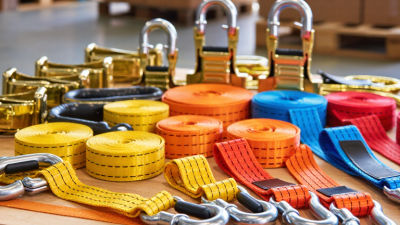
Ratchet Straps are a practical choice when cargo needs firm, adjustable restraint during transport. Their ratcheting mechanism lets an operator tighten webbing in controlled increments, helping reduce slack around pallets, equipment, and boxed goods. The handle gives clear feedback. The load feels secure. But that feeling alone is not proof.
For transparency, the following is an illustrative quote, not a statement from a verified, named industry expert: “A strap is only as dependable as its rating, condition, and correct use.” It captures an important point. Choose straps with a working load limit suited to the task, and inspect the webbing, stitching, hooks, and ratchet before use. Frayed fibers, bent hardware, or a jammed handle deserve attention. Small defects can matter.
In this guide, we’ll look at why Ratchet Straps are valued for tension control, versatility, and straightforward operation. We’ll also consider their limits, including abrasion, sharp edges, and uneven load shapes. A corner protector can help prevent webbing damage. So can thoughtful strap placement. Still, no single setup suits every load. Check the manufacturer’s instructions, secure the cargo appropriately, and reassess the arrangement when conditions change. Ratchet Straps can make securement more manageable, but they do not replace sound judgment. That distinction is easy to overlook.

Ratchet Strap Mechanics: How the Pawl-and-Drum System Builds Tension
A ratchet strap builds tension through a simple mechanical sequence. The handle turns a narrow drum, and the drum winds in the webbing. A spring-loaded pawl catches the toothed gear as it rotates. Each handle stroke advances the gear and takes up more slack. Click by click.
That clicking sound is useful, but it does not measure tension. The force depends on the handle, the mechanism, and how the strap is routed. Pulling harder is not always better; excessive force can damage cargo or strain an anchor point. Pause and check the load. The webbing should lie flat, without twists, and sharp edges need suitable protection. Even a small fold can create uneven loading.
To release the strap, the operator uses the release mechanism to disengage the pawl, then allows the drum to unwind under control. This step deserves care. Tension can disappear quickly, and a handle may move suddenly. Inspect the webbing for cuts, fraying, or damaged stitching before use. A ratchet can feel solid while the strap itself is already compromised. That is easy to overlook. My own reminder is simple: check the strap, the anchors, and the load again after tightening.
Working Load Limits: Federal Rules Require Aggregate WLL of at Least 50% of Cargo Weight
Ratchet straps give a driver controlled tension and a clear way to secure cargo against shifting. Their winding mechanism can help snug a strap over a pallet or across a stack of lumber. But a tight-looking strap is not proof of a compliant tie-down system. The rating matters.
Under U.S. federal cargo-securement rules, the aggregate working load limit (WLL) of the tie-downs must generally equal at least 50 percent of the cargo’s weight. For a 2,000-pound load, that means at least 1,000 pounds of aggregate WLL. Use the WLL marked on each strap, not its breaking strength. Add only the ratings that count under the applicable securement rules, and check for commodity-specific requirements. The 50 percent figure is a minimum, not a guarantee against every movement.
Inspect each strap before use. Fraying, cut edges, damaged stitching, or a bent ratchet can weaken the system. Place edge protection where straps touch sharp corners, and keep the webbing flat rather than twisted. Then recheck tension after the load settles. It takes a moment. Even careful setup can miss a shifting pallet or a loose strap, so inspect again during the trip when it is safe to do so.
Tiedown Counts: FMCSA Minimums Increase with Cargo Length and Weight
Why Choose Ratchet Straps for Cargo Securement?
Tiedown Counts: FMCSA Minimums Increase with Cargo Length and Weight
Ratchet straps provide controlled tension and make it easier to check a load during a trip. But strap choice does not replace the required tiedown count. Under FMCSA’s 49 CFR §393.110, an article up to 5 feet long and 1,100 pounds needs at least one tiedown. If it weighs more than 1,100 pounds, it needs at least two. Loads over 5 feet and up to 10 feet also need at least two. For longer articles, add one tiedown for each additional 10 feet, or fraction of 10 feet. That fraction rule is easy to overlook.
FMCSA’s §393.106(d) also requires the tiedowns’ aggregate working load limit to equal at least half the cargo’s weight. Check the load’s length and weight, then verify each strap’s working load limit on its tag. A strap can feel tight and still be insufficient. I would rather recheck than guess.
Tips: Protect straps from sharp edges, and keep ratchets clear of loose debris. After tightening, inspect the load again at a safe stop. Small shifts matter.
Why Choose Ratchet Straps for Cargo Securement? - Tiedown Counts: FMCSA Minimums Increase with Cargo Length and Weight
Ratchet straps let operators apply and adjust tension to help restrain cargo. Choose straps with adequate working load limit (WLL), inspect them before use, and protect them from sharp edges. The minimum tiedown counts below are based on 49 CFR § 393.110; they are not a substitute for meeting all cargo-securement requirements.
FMCSA Minimum Tiedown Counts for Individual Articles
| Article length |
Article weight |
Minimum tiedowns |
Example |
| 5 ft or less |
1,100 lb or less |
1 |
A 4 ft, 900 lb item: at least 1 |
| 5 ft or less |
More than 1,100 lb |
2 |
A 5 ft, 1,500 lb item: at least 2 |
| More than 5 ft, up to 10 ft |
Any weight |
2 |
A 9 ft item: at least 2 |
| More than 10 ft, up to 20 ft |
Any weight |
3 |
A 16 ft item: at least 3 |
| More than 20 ft, up to 30 ft |
Any weight |
4 |
A 25 ft item: at least 4 |
| More than 30 ft |
Any weight |
2 for the first 10 ft, plus 1 for each additional 10 ft or fraction thereof |
A 34 ft item: at least 5 |
Why Use Ratchet Straps?
| Practical benefit |
Securement consideration |
| Controlled tensioning |
A ratchet mechanism helps tighten and adjust the strap; tension should be appropriate for the cargo and equipment. |
| Adjustable length |
Select a strap length and anchor arrangement that fit the load and trailer without twists or unsuitable contact points. |
| Visible capacity information |
Use properly marked tiedowns and account for their WLL when determining whether the securement system has sufficient capacity. |
| Reusable equipment |
Inspect webbing, stitching, hooks, and ratchet components; do not use damaged or unreadable equipment. |
Important: Under 49 CFR § 393.106, the aggregate WLL of the tiedowns used to secure an article against movement must generally be at least one-half the article’s weight. The system must also meet applicable requirements for direction of movement, blocking, bracing, and cargo type. Special rules may apply to particular commodities or vehicle configurations; consult the applicable regulations.
Cargo Forces: Securement Systems Must Resist 0.8g Forward Acceleration
Why Choose Ratchet Straps for Cargo Securement?
A sudden stop can push cargo forward with force equal to about 0.8 times its weight. A 500-kilogram load may therefore exert roughly 400 kilograms-force forward.
That is a substantial demand on the complete securement system, not just the strap.
Ratchet straps help apply controlled tension and keep cargo from shifting, but their effectiveness depends on anchor points, strap direction, load contact, and any blocking used. Small details matter.
Before departure, check the strap’s working load limit and inspect the webbing for cuts, worn edges, or damaged stitching. Place protective sleeves over sharp corners; a tight strap can still be damaged by one rough edge.
Keep straps positioned to resist forward movement, and confirm that anchors are rated for the forces they may receive. Friction helps, but it should not be treated as the only restraint.
I have seen a load look secure while a loose gap allowed it to move before the straps took full force. That is easy to miss.
Recheck tension after the cargo settles, especially after a short drive or a change in road conditions.
Strap Selection and Inspection: Check WLL Labels, Webbing, and Hardware
Ratchet straps offer controlled tension, but securement starts with choosing the right strap and checking its condition. Read the Working Load Limit (WLL) label before loading. WLL is the permitted working capacity, not the strap’s breaking strength. The Federal Motor Carrier Safety Administration’s Cargo Securement Handbook, applying 49 CFR 393.106(d), states that aggregate tiedown WLL must generally equal at least 50% of the cargo’s weight. Confirm the label is legible and the strap suits the load and tie-down points.
Inspect the full webbing under good light. Look for cuts, frayed edges, melted fibers, chemical damage, or loose stitching. Check the ratchet, hooks, and connection points for cracks, bends, sharp burrs, or heavy corrosion. A quick visual check is not foolproof; grime can hide a small cut. Remove questionable straps from service rather than guessing. I have seen sound-looking hardware paired with badly worn webbing.
Tips: Read the tag. Run the webbing through your hands, and test the ratchet without a load. Stop if it sticks, slips, or fails to lock.