Choosing a reliable Webbing Strap manufacturer requires more than comparing online catalogs or attractive factory photos. Global buyers need consistent materials, accurate specifications, stable production, and responsive communication. This guide, “2026 Top Webbing Strap Manufacturers for Global Buyers,” introduces suppliers with practical purchasing needs in mind.
The review considers polyester, nylon, polypropylene, and specialized webbing options. It examines tensile strength, abrasion resistance, color consistency, edge finishing, and load performance. Factory experience matters. So does documented quality control. We look for manufacturers that can provide test reports, production samples, traceable materials, and clear inspection procedures. Certifications, export experience, minimum order quantities, lead times, and packaging standards also influence each supplier’s position.
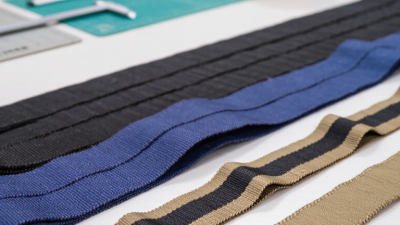
Details often reveal more than promises. A clean sample roll should show even weaving, firm edges, and no loose fibers. A dependable factory should explain how it controls tension during production. It should also identify what changes between a laboratory sample and mass production. No ranking is perfect. Supplier capabilities can change, and buyer requirements differ widely. A manufacturer suited to outdoor equipment may not fit automotive restraint systems. For this reason, readers should verify current certificates, samples, testing methods, and commercial terms before placing an order. This overview aims to provide a practical starting point for informed sourcing decisions in 2026.
Webbing strap manufacturers produce narrow, woven textile bands for controlled tension, lifting, fastening, and load distribution. Common materials include polyester, nylon, polypropylene, and aramid fibers. Each creates different results. Polyester offers low stretch and strong weather resistance, while nylon absorbs more energy but can elongate when wet. Polypropylene is lightweight and economical, yet usually performs poorly under heat and abrasion.
The main types include flat webbing, tubular webbing, elastic webbing, seat-belt webbing, and high-strength technical webbing. Their applications range from cargo restraint and outdoor equipment to automotive interiors, furniture, medical supports, and industrial safety systems.
Grand View Research valued the global technical textiles market at approximately USD 226 billion in 2023, with continued growth projected through 2030. This broader market signal matters. However, webbing demand cannot be judged by market size alone.
Width, weave density, coating, edge construction, and tested breaking strength often determine real purchasing value.
Tips: Ask manufacturers for batch-level test reports, elongation data, abrasion results, and operating-temperature limits. Check whether testing follows relevant methods, such as ASTM D6775 for textile webbing strength. A clean sample can still hide inconsistent stitching. Request production samples, inspect the edges, and compare measured width with the specification. Color consistency is useful, but performance deserves priority. Always match the strap to its actual load, movement, moisture, and storage conditions.
Evaluating a webbing strap manufacturer requires more than comparing prices. Start with material knowledge, production experience, and clear technical records. Ask whether the factory controls yarn selection, weaving tension, edge finishing, and heat treatment. These details affect strength and appearance.
Request samples from different production batches. Measure width, thickness, tensile strength, elongation, abrasion resistance, and colorfastness. Test straps under conditions close to actual use, including repeated pulling and bending. A reliable manufacturer should provide test methods, batch numbers, and traceable inspection records. Independent laboratory reports can add confidence, but buyers should verify their dates and sample details.
Capacity matters during seasonal demand. Review equipment, quality checkpoints, daily output, minimum order quantities, and realistic lead times. Ask how the manufacturer handles rejected rolls, design changes, and delayed materials. Clear answers reveal operational maturity. Communication matters too. Technical replies should include drawings, tolerances, and measurable solutions, not vague promises.
Do not trust polished samples alone. A perfect sample may hide inconsistent bulk production. I have seen specifications accepted too quickly, then revised after field testing. That mistake costs time. A practical buyer should document every requirement and approve a pre-production sample before ordering. The strongest supplier is not always the cheapest. It is the one that explains limitations, records evidence, and improves when problems appear.
| Evaluation Dimension | Typical Industry Data or Benchmark | What Global Buyers Should Verify | Why It Matters |
|---|---|---|---|
| Material Portfolio | Common materials include polyester, polypropylene, nylon, cotton, aramid and recycled polyester. | Confirm fiber composition, yarn specification, recycled content percentage and material traceability for each product code. | Material selection affects tensile strength, elongation, abrasion resistance, moisture absorption, UV performance and cost. |
| Available Widths | Commercial webbing is commonly produced in widths from approximately 10 mm to 100 mm; specialized lines may cover a wider range. | Request a current width chart, dimensional tolerances and production capability for narrow, standard and wide webbing. | Accurate width control is essential for buckles, sewn assemblies, lifting systems, bags and safety equipment. |
| Breaking Strength | The required breaking strength varies significantly by material, width, weave and end use. Product specifications should state the tested value in newtons or kilonewtons. | Ask for lot-specific test reports showing breaking force, test direction, specimen details and conditioning method. | Breaking strength is a core safety and performance indicator and should not be estimated from material type alone. |
| Strength Consistency | A reliable supplier should monitor variation between production lots and define an internal acceptance limit before shipment. | Review historical inspection records, control charts or sample data covering multiple production lots. | Low variation reduces assembly failures, customer complaints and differences between repeat orders. |
| Testing Standards | Relevant textile and webbing evaluations may reference ISO 13934-1, ASTM D5035 or ASTM D6775, depending on product type and application. | Confirm the exact test method, laboratory equipment, sampling plan and whether the method matches the destination market. | Results from different test methods are not always directly comparable. |
| Elongation Control | Elongation differs by fiber and construction; buyer specifications should define the load level and allowable percentage rather than using a general target. | Request elongation data at the intended working load and at break, including the test speed and conditioning conditions. | Controlled elongation is important for restraint systems, sporting goods, luggage and precision-adjustment products. |
| Abrasion Resistance | Performance depends on yarn type, weave density, edge construction, coating and finishing treatment. | Check abrasion-test results, test equipment, number of cycles and whether the test simulates actual contact surfaces. | High abrasion resistance extends service life where straps pass through buckles, guides or metal fittings. |
| Colorfastness | Important evaluations may include colorfastness to washing, rubbing, perspiration and light exposure. | Specify the required color scale, test condition, acceptable grade and whether light-colored or fluorescent shades need separate controls. | Color migration and fading can create quality issues in apparel, automotive, outdoor and consumer products. |
| UV and Weather Resistance | Polyester generally offers better UV resistance than many untreated nylon constructions, but actual performance depends on yarn, dye and finish. | Request accelerated weathering data and define the expected outdoor exposure period and climate conditions. | Outdoor straps require resistance to sunlight, humidity, temperature changes and repeated wet-dry cycles. |
| Edge Quality | Acceptable webbing should have uniform edges without excessive fuzzing, broken selvage yarns, sharp ridges or loose threads. | Inspect edge appearance under normal lighting and evaluate edge performance after cutting, sewing and repeated use. | Stable edges improve operator efficiency and reduce fraying during assembly and service. |
| Thickness and Weight | Thickness and mass per unit length depend on construction; tolerances should be agreed in the technical specification. | Verify thickness, grams per meter, measuring pressure and sampling frequency. | Consistent thickness ensures proper fit in buckles, guides, sewing machines and automated assembly equipment. |
| Customization Capability | Typical customization options include width, color, weave pattern, printed markings, coatings, cut length and packaging. | Confirm sample approval procedures, minimum order quantities, tooling charges and repeat-order color control. | Strong customization capability supports private-label programs and application-specific designs. |
| Dyeing and Finishing | Available finishes may include water repellency, heat setting, stiffening, softening, anti-slip treatment and polyurethane coating. | Verify finish durability after washing, abrasion, heat exposure and contact with the buyer's hardware or chemicals. | Finishes can significantly improve handling and performance but may change flexibility, strength and recyclability. |
| Chemical Compliance | Global buyers may require compliance with applicable chemical restrictions such as REACH requirements, restricted-substance lists and destination-market rules. | Request current declarations, material safety information where applicable and third-party test reports for restricted substances. | Documented chemical compliance reduces customs, regulatory and product-liability risks. |
| Social and Environmental Documentation | Mature suppliers may provide factory audit records, environmental procedures, recycled-content evidence and wastewater-management information. | Check audit validity, scope, corrective-action status and chain-of-custody documentation for recycled fibers. | Transparent documentation supports responsible sourcing and retailer compliance programs. |
| Quality Management | A structured quality system should cover incoming yarn inspection, in-process controls, final inspection, nonconformance handling and corrective action. | Review quality certificates, inspection plans, calibration records and procedures for handling customer complaints. | Documented controls are more dependable than visual inspection alone. |
| Production Capacity | Capacity should be expressed by product family and time period rather than as a single total figure. | Confirm monthly capacity, current utilization, peak-season availability, machine types and backup production arrangements. | Capacity transparency helps buyers plan launches and avoid supply interruptions. |
| Lead Time | Standard repeat orders commonly require less time than custom colors, special coatings or new constructions. | Obtain separate timelines for sampling, color approval, production, inspection and export documentation. | Clear lead-time planning prevents delays caused by treating all orders as standard products. |
| Packaging and Export Readiness | Webbing is commonly supplied in rolls, coils or cut lengths with moisture protection and identification labels. | Define roll length, core size, label content, carton limits, pallet requirements and export-document procedures. | Correct packaging protects the product and simplifies receiving, inventory control and customs clearance. |
| Sample and Approval Process | A professional approval package normally includes a physical sample, specification sheet, color reference and test data. | Ensure the approved sample is linked to a controlled product code and retained as the reference for mass production. | Formal sample approval reduces disputes over color, hand feel, dimensions and performance. |
| Commercial Transparency | Quotations should identify material, width, thickness, finish, packaging, quantity basis, delivery term and validity period. | Compare equivalent specifications and clarify tooling, testing, sampling, freight and payment costs separately. | Transparent quotations prevent misleading price comparisons and unexpected charges. |

In 2026, global webbing strap sourcing is shifting from price comparison toward application-specific performance. Grand View Research valued the global technical textiles market at approximately USD 226.5 billion in 2023. Its outlook expects continued growth through 2030. Webbing is only one segment. That distinction matters.
Mordor Intelligence estimates the global webbing market could grow at roughly 6% annually during the 2025–2030 period. Leading manufacturer categories include narrow-fabric weaving specialists, industrial load-restraint producers, automotive safety suppliers, and outdoor equipment manufacturers. Polyester remains popular for abrasion resistance and cost control. Nylon offers higher elasticity and impact absorption. Polypropylene serves lightweight, moisture-resistant applications. Recycled fibers are gaining attention, although performance consistency still needs careful verification.
No forecast is perfectly clean. Market reports often classify webbing differently, and some supplier data remains self-reported. Experienced buyers should request batch-level tensile results, width tolerance, elongation data, colorfastness records, and traceability documents. For lifting products, testing aligned with EN 1492 may be relevant. Automotive applications require applicable regional restraint standards. A factory audit can reveal practical weaknesses, such as uneven edge stitching, unstable dye lots, or poor packaging in humid warehouses. Certifications help, but they do not replace product testing. That is an uncomfortable point. Supplier category, material choice, and end-use testing should be evaluated together.
Reliable webbing strap manufacturing begins with controlled materials, not attractive samples. Experienced producers identify fiber type, yarn strength, weave density, and coating needs before production. Common materials include polyester, nylon, polypropylene, and recycled fibers. Each performs differently under abrasion, moisture, heat, and repeated loading.
Manufacturers serving global buyers should maintain documented procedures for incoming material checks, loom calibration, color control, and batch traceability. Testing may include tensile strength, elongation, abrasion resistance, colorfastness, and seam performance. Independent laboratory testing adds credibility when applications involve safety, lifting, outdoor equipment, or demanding industrial use. Clear technical data matters.
Small details reveal process maturity. Inspectors may measure width at several points, examine edge fraying, and compare rolls under neutral lighting. Samples should be tested after conditioning, not only when they are new. Some factories still rely too heavily on visual inspection. That is a weakness worth questioning. A strap can look uniform while hiding inconsistent yarn tension or uneven coating. Buyers should request production records, tolerance ranges, test methods, and corrective-action reports. Practical audits also examine worker training, equipment maintenance, storage humidity, and packaging protection. Recycled content can reduce environmental impact, but its strength and color consistency require honest verification. Claims without supporting records deserve caution.
2026 Top Webbing Strap Manufacturers for Global Buyers
International buyers should judge webbing strap suppliers through evidence, not polished catalogs. Request samples that match the intended width, weave, material, color, and finishing process. Check tensile strength, elongation, abrasion resistance, and edge stability under realistic conditions. A supplier may provide excellent samples, yet bulk production can vary. Confirm batch controls, inspection records, and production capacity before placing a larger order.
Speak directly with the technical team. Ask how they control yarn tension, dye consistency, coating thickness, and roll length. Reliable manufacturers can explain tolerances clearly and provide current test reports from qualified laboratories. Review minimum order quantities, tooling charges, packaging details, lead times, payment terms, and shipping responsibilities. Factory visits help, but video inspections and independent audits can also reveal useful details. Do not rely on photographs alone.
Tips: Compare at least three suppliers using the same specification sheet. Test samples after washing, pulling, folding, and exposure to expected conditions. Keep written approval samples for future quality checks. Ask whether production materials come from consistent sources. One mistake we often see is accepting a low price before calculating rejection, delay, and rework costs. No checklist is perfect. Leave room for follow-up questions, because unclear answers often become expensive surprises.
Recommended evaluation weighting for international buyers sourcing webbing straps. Prioritize documented quality controls, product testing, traceability, compliance records, delivery performance, and customization capability. Verify each supplier against the specific end-use requirements and destination-market regulations.
The weighting model is designed for supplier comparison rather than company ranking. Relevant evidence may include ISO 9001 quality-management documentation, batch-level test reports, material traceability, REACH or other applicable chemical-compliance records, and verified production lead times.