Why Choose Webbing Strap for Global Sourcing?
Why Choose Webbing Strap for Global Sourcing?
Global buyers need more than a low unit price. They need stable performance, repeatable quality, and predictable delivery. Webbing Strap supports these priorities through controlled width, tensile strength, abrasion resistance, and flexible customization. A polyester strap can secure cartons, outdoor equipment, automotive components, or lifting accessories. The application changes. The sourcing discipline should not.
The market context is significant. Textile Exchange reported that global fiber production reached approximately 124 million tonnes in 2023. It may approach 160 million tonnes by 2030. This growth increases pressure for recycled inputs, traceable suppliers, and measurable environmental claims. Smithers also identifies technical textiles as a major growth field, driven by mobility, construction, safety, and industrial applications. These reports do not isolate every Webbing Strap category, so market estimates require careful interpretation. That limitation matters.
Dr. Behnam Pourdeyhimi, a respected textile-engineering researcher, describes textiles as “engineered materials, not merely fabrics.” His point fits webbing procurement closely. A strap is not just a woven strip. It is a tested component with defined load behavior, edge stability, color consistency, and finishing requirements. Global sourcing can reduce costs and broaden supplier options. It can also create hidden risks. A cheaper strap may fail after heat exposure, repeated flexing, or inconsistent dyeing.
Ask for test reports, production samples, recycled-content evidence, and batch records. Check the factory’s actual capacity, not only its brochure. Review packaging details too. A damp carton can damage carefully produced rolls. Reliable sourcing is rarely perfect. It improves through verification, honest specifications, and continuous supplier review.
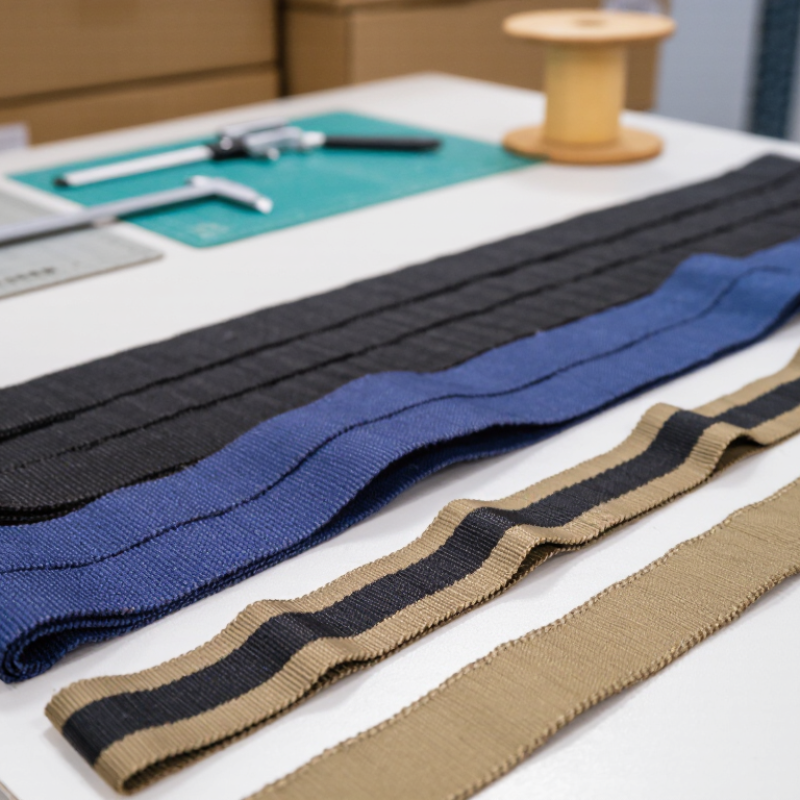
Webbing Strap Basics: Polyester, Nylon, and Polypropylene Compared
Why Choose Webbing Strap for Global Sourcing?
Webbing Strap Basics: Polyester, Nylon, and Polypropylene Compared
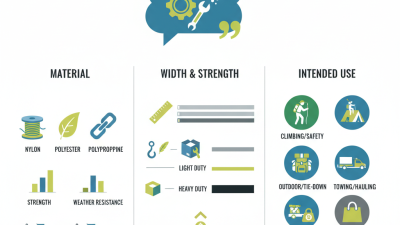
Webbing straps look simple, but fiber choice changes performance, cost, and handling. In sourcing work, I check the load, environment, and sewing method before comparing prices. Polyester webbing offers strong abrasion resistance and low stretch. It also handles sunlight better than many alternatives. This makes it suitable for outdoor covers, cargo restraint systems, and durable equipment assemblies. Still, a cheaper polyester strap may have uneven edges or inconsistent thickness.
Nylon webbing feels softer and stretches more under tension. Its high strength suits lifting accessories, protective gear, and products needing flexibility. However, nylon absorbs moisture, which can affect dimensions and performance after repeated wetting. Polypropylene is lightweight, moisture-resistant, and naturally buoyant. It can reduce shipping weight and material costs. Yet it usually offers lower abrasion and heat resistance. It may fail sooner when dragged across rough surfaces. That trade-off is easy to underestimate.
Tips: Request samples, width and thickness measurements, breaking-strength data, colorfastness results, and stitching tests. Compare performance after moisture, heat, and repeated flexing. Ask whether the supplier controls yarn quality and batch consistency. Do not judge a strap by appearance alone. I once found a visually clean sample with weak stitching; that mistake would have been expensive in production. Also, specifications can be misunderstood across countries, so use clear drawings and agreed test methods.
Load Safety: EN 1492-1 Requires a Minimum 7:1 Safety Factor
Why Choose Webbing Strap for Global Sourcing?
Load safety should guide every webbing strap purchase.
EN 1492-1 requires a minimum 7:1 safety factor for textile lifting slings. This means the minimum breaking force must be at least seven times the working load limit.
It does not mean a sling can safely lift seven times its rated load.
WLL remains the controlling figure. The European Committee for Standardization also stresses correct identification, stitching, and inspection throughout a sling’s service life.
This matters because lifting failures are rarely caused by fabric alone.
Sharp edges, uneven loading, heat, chemicals, and hidden abrasion
can reduce strength quickly. The International Labour Organization and World Health Organization estimated 2.93 million work-related deaths globally in 2019. That figure covers all industries, but it reinforces a practical point: small control gaps can become serious injuries.
Buyers should request
traceable test certificates, clear WLL markings, batch records, and inspection guidance.
UK HSE guidance also uses six-monthly thorough examinations as a benchmark for lifting accessories, although local requirements may differ.
A useful sourcing check is simple.
Can the supplier explain the 7:1 calculation?
Can inspectors see damaged yarn beneath surface coating?
A certificate alone is not enough.
I may be too cautious, but a lower price often hides weaker documentation, inconsistent stitching, or unsuitable webbing. Global sourcing works better when
safety evidence travels with every strap.
Testing Standards: ASTM D6775 Measures Webbing Breaking Strength
Webbing strap is a practical choice for global sourcing because its strength can be tested consistently. ASTM D6775 measures webbing breaking strength and elongation under controlled laboratory conditions. The method helps buyers compare polyester, nylon, and other textile constructions using clear force results.
In sourcing work, I look beyond the highest breaking-strength number. A strap can pass one test yet fail after abrasion, moisture, or repeated loading. ASTM D6775 should therefore support, not replace, application testing. The 2024 Textile Exchange Materials Market Report recorded about 124 million tonnes of global fiber production in 2023. This scale increases the need for reliable lot control. Ask for test reports showing specimen details, breaking force, elongation, test date, and equipment calibration. A certificate is not magic. Sometimes, small production changes matter more than impressive headline strength.
Tips: Request samples from several production lots. Check width, thickness, stitching, and edge quality with a simple inspection gauge. Confirm that the laboratory used the current ASTM D6775 edition. Compare the reported force with your real load direction and attachment design. Do not ignore elongation. Excess stretch may affect cargo stability, even when breaking strength looks excellent. I would also repeat testing after conditioning, because field performance can be less tidy than laboratory results. Sources: ASTM D6775, Standard Test Method for Breaking Strength and Elongation of Textile Webbing; Textile Exchange, 2024 Materials Market Report.
Why Choose Webbing Strap for Global Sourcing?
Testing Standards: ASTM D6775 Measures Webbing Breaking Strength
ASTM D6775 is used to determine the breaking strength and elongation of textile webbing, tape, and narrow fabric. The chart shows exact force-unit conversions for common reference levels; it does not define universal pass/fail limits. Required breaking strength should be agreed in the sourcing specification according to webbing material, width, construction, and application.
Compliance Review: Verify ISO, REACH, RoHS, and Traceability Records
Webbing straps look simple, but global sourcing requires more than a tensile-strength sample. A compliance review should begin with the exact material list, coating details, dyeing process, and hardware specification. ISO Survey data reports more than 1.2 million ISO 9001 certificates worldwide in its latest published edition. Yet ISO 9001 confirms process management, not automatic REACH or RoHS compliance. Paperwork is not proof.
Ask suppliers for current REACH declarations, RoHS test reports, safety data, and batch-level traceability records. The European Chemicals Agency’s 2024 Candidate List contained more than 240 substances of very high concern. Your strap may contain polyester, nylon, pigments, adhesives, or metal fittings. Each component needs review. RoHS restricts ten substances in electrical and electronic applications, so its relevance depends on the strap’s final use. This detail is often missed.
Traceability should connect the finished roll to fiber lot, dye lot, production date, operator records, and laboratory results. Keep sample labels and inspection photos. Check whether reports identify the tested material clearly. A generic certificate can be valid, but still unsuitable for your product. We have seen records with correct dates but incomplete lot numbers. Small gaps matter. Independent laboratory testing improves confidence, although it does not replace supplier audits. Requirements also change, and older declarations may need reassessment. A practical review compares every document against the purchase specification before shipment.