How to Choose the Right Polyester Sling for Lifting?
Choosing the right Polyester Sling is not a simple matter of matching color to lifting capacity. A safe selection begins with the load, the lifting method, and the working environment. A compact steel frame may need different protection than a smooth concrete panel. Sharp edges, heat, chemicals, moisture, and repeated movement can all weaken textile lifting equipment. Even a sling that looks clean may have hidden damage.
Reliable decisions depend on verified information. Read the identification label carefully. Check the working load limit, sling length, lifting configuration, and manufacturer’s instructions. A vertical lift, basket hitch, and choker hitch can have different capacities. Sling angles matter too. As the angle becomes smaller, tension increases. That detail is often underestimated.
Look closely.
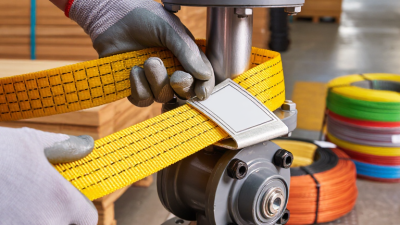
Before use, inspect stitching, webbing, eyes, and protective sleeves. Search for cuts, pulled fibers, melted areas, discoloration, crushed sections, and chemical damage. Keep the sling away from unprotected corners. Use suitable edge protection when contact with steel or rough surfaces is possible. Never drag it across the floor or expose it to conditions outside its rated range.
Industry guidance and competent inspection procedures provide a strong foundation, but practical judgment remains essential. A label cannot reveal every risk. The load may shift, the center of gravity may be unclear, or the selected hitch may behave differently than expected. Careful planning, trained personnel, and documented inspections make the choice more dependable. Some decisions will still require reassessment on site. That is not a weakness. It is responsible lifting practice.
Understanding Polyester Sling Types and Their Lifting Applications
How to Choose the Right Polyester Sling for Lifting?
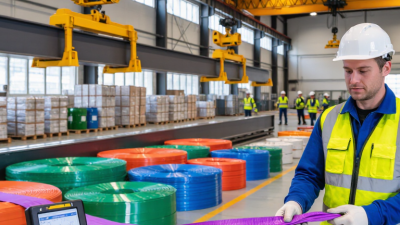
Understanding polyester sling types helps match equipment to real lifting conditions. Flat web slings provide broad contact with boxed loads and resist crushing. Endless round slings wrap smoothly around irregular objects. Their soft cover protects painted or polished surfaces, but sharp edges can still cut the fibers. Never rely on appearance alone.
The lifting method also changes sling performance. A vertical hitch gives a direct lift, while basket and choker hitches have different rated capacities. Sling angles matter greatly. As the angle decreases, tension increases. Always check the capacity label and follow the manufacturer’s load chart. A trained lifting professional should verify the load weight, balance, center of gravity, and connection points before work begins.
A practical inspection should look for cuts, melted fibers, pulled stitching, chemical damage, and unreadable labels. Keep slings away from sharp corners with suitable edge protection. Polyester handles many common environments, but excessive heat, strong chemicals, and prolonged sunlight can weaken it. I have seen operators focus on capacity and overlook abrasion at one contact point. That small oversight can become serious. Remove doubtful slings from service. Do not repair them casually. Even a sling that looks clean may have hidden internal damage after a sudden loading event.
How to Choose the Right Polyester Sling for Lifting?
Polyester slings can be used in vertical, choker, basket, and multi-leg configurations. The chart compares common rated-capacity factors relative to the same sling used in a vertical hitch.
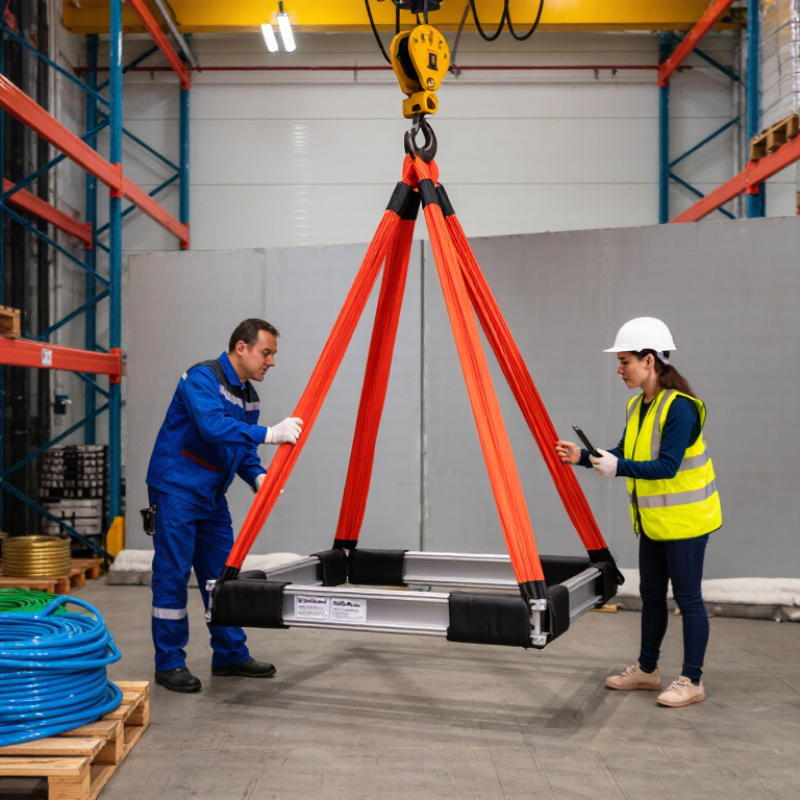
A vertical hitch is the reference value of 1.00. A choker hitch is commonly rated at 0.80, a basket hitch at 2.00, and a two-leg bridle at a 60° included angle at approximately 1.73 times the single-leg vertical rating. Always confirm the working load limit, sling angle, hitch type, edge protection, and applicable lifting standard before use.
Matching Sling Capacity to Load Weight, Shape, and Balance
How to Choose the Right Polyester Sling for Lifting?
Choosing a polyester sling starts with the load, not the sling color. Weigh the load accurately, including pallets, fixtures, and hidden attachments. Then inspect its shape. A sharp corner can cut fibers, even when the load feels stable. OSHA 1910.184 requires synthetic slings to show rated capacity and receive regular inspections.
WSTDA-WS-1 capacity tables distinguish vertical, choker, and basket hitches. They also show that hitch selection changes working capacity. A basket hitch may support more than a vertical hitch, but only when both legs share the load evenly. Sling angle matters. As the angle narrows, leg tension rises quickly. At a 30-degree angle, each leg carries roughly twice the vertical load component. That detail is easy to miss.
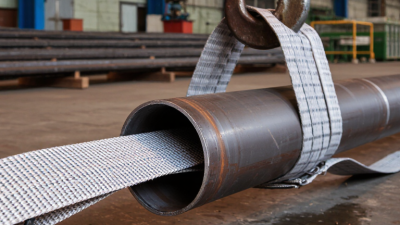
Balance can be less obvious than weight. Locate the center of gravity before lifting, then position the sling above it. If the load tilts, stop and adjust. Do not “correct” it with a sudden crane movement. ASME B30.9 emphasizes using rated capacities for the actual hitch, angle, and sling condition. Edge protectors are essential for beams, plates, and unfinished castings. They should cover contact points completely. In real lifting work, the first calculation is sometimes wrong. Recheck it when the load moves. A clean sling is not automatically a safe sling. Discard one showing cuts, burns, melted fibers, damaged stitching, or chemical weakening.
Selecting the Correct Sling Length, Width, and Configuration
Selecting the correct polyester sling begins with the load’s weight, shape, and lifting method. Never choose by appearance alone. Check the working load limit for the intended hitch, not just the sling’s straight-lift rating. A basket hitch may provide greater capacity, while a choker hitch can reduce it. The angle also matters. As the angle becomes smaller, tension increases sharply.
Length affects control and safety. Choose enough length for secure contact without forcing the sling around sharp corners. Excess material can create loose loops, while insufficient length may pull unevenly. Measure the load’s width, height, and lifting points before ordering. For long or flexible loads, two slings may offer better balance than one. A spreader arrangement can reduce side pressure, but it requires compatible hardware and careful planning.
Width should match the load surface and edge conditions. Wider slings distribute pressure more evenly, especially beneath painted, fragile, or narrow surfaces. However, width alone does not prevent cutting. Use suitable edge protection and keep the sling centered. Inspect stitching, fibers, labels, and contamination before every lift. Even experienced teams can miss damage hidden under a folded section. I have found that rushed measurements cause more problems than difficult lifts. Recheck the length and configuration after the sling is positioned, then keep people clear of the suspended load.
How to Choose the Right Polyester Sling for Lifting? - Selecting the Correct Sling Length, Width, and Configuration
| Lifting Requirement |
Recommended Sling Length |
Typical Sling Width |
Suitable Configuration |
Typical Working Load Limit |
Selection Notes |
| Small, compact loads |
1–2 m |
25–50 mm |
Single-leg, straight lift |
1–2 t vertically |
Use when the sling can connect directly to certified lifting points without excessive slack. |
| General-purpose machinery or pallets |
2–4 m |
50–75 mm |
Endless, eye-and-eye, or basket hitch |
2–4 t vertically |
Choose a length that keeps the hook clear of the load while avoiding unnecessary loops. |
| Wide or irregular loads |
3–6 m |
75–150 mm |
Basket hitch or two-leg bridle |
3–8 t vertically |
Use wider webbing for improved load contact and reduced pressure on suitable surfaces. |
| Heavy steel, concrete, or fabricated structures |
4–8 m |
100–300 mm |
Basket hitch, double basket, or multi-leg arrangement |
5–20 t vertically |
Confirm load balance, edge protection, connection-point strength, and the marked WLL before lifting. |
| Loads requiring a controlled wrap |
2–5 m |
50–100 mm |
Choker hitch |
Up to 80% of the vertical WLL |
A choker reduces capacity; keep the choke angle and bend radius within the sling manufacturer’s instructions. |
Common Polyester Webbing Sling Configurations
| Configuration |
Typical Capacity Factor |
Best Application |
Important Limitation |
| Straight vertical lift |
1.00 × marked vertical WLL |
Loads with suitable lifting points |
The load must remain stable and centered beneath the hook. |
| Basket hitch at 90° from horizontal |
Up to 2.00 × vertical WLL |
Loads that can be fully supported by the sling |
Both sling legs must share the load evenly; the load must not slide out. |
| Basket hitch at 60° from horizontal |
Approximately 1.73 × vertical WLL |
Wide loads lifted with an angled arrangement |
The angle must be measured correctly and the load must be balanced. |
| Basket hitch at 45° from horizontal |
Approximately 1.41 × vertical WLL |
Loads requiring additional clearance |
Lower angles create higher leg tension and should be avoided unless specifically rated. |
| Choker hitch |
Approximately 0.80 × vertical WLL |
Cylindrical or bundled loads |
Do not force the eye through a small opening or use a choke over sharp edges. |
Safety note: Working Load Limits are affected by sling width, length, hitch type, lifting angle, edge condition, bend radius, load shape, and the sling’s certified rating. Always follow the sewn label, applicable lifting standard, and a competent person’s lifting plan. Do not use a sling that is cut, chemically damaged, heat-damaged, excessively worn, or missing its identification label.
Checking Material Quality, Safety Factors, and Certification
Choosing a polyester sling starts with its material quality, not its color or price. High-quality polyester webbing feels dense, even, and flexible without brittle edges. Inspect the stitching closely. Loose threads, melted fibers, cuts, and flattened sections can indicate serious damage. In lifting inspections, I have found that small edge cuts are often overlooked. That mistake can become expensive.
Check the working load limit (WLL) for the exact lifting method. A vertical lift, basket hitch, and choker hitch can have different capacities. Sling angles also affect tension. As the angle becomes smaller, the force on each sling leg increases. Never guess the capacity from appearance. Confirm the safety factor stated by the manufacturer and keep the load below the marked WLL. The sling should also match the environment. Oil, heat, sharp edges, ultraviolet exposure, and certain chemicals may weaken polyester. Protective sleeves help, but they are not magic.
Tips: Read the identification label before every lift. Look for WLL, length, material, and traceable serial information. Request test certificates from a competent, independent body, and check whether the documents match the sling markings. Certification alone is not proof of current safety. A certified sling can still be damaged today. I sometimes see teams replace a sling only after visible failure begins. That is too late. Store slings clean, dry, and away from sharp metal. When doubt remains, quarantine the sling and ask a qualified lifting inspector.