Leave Your Message

2026 Best Ratchet Straps for Global Buyers?

Choosing the 2026 best Ratchet Straps requires more than comparing prices or bright product photographs. Global buyers need dependable restraint performance, clear specifications, and suppliers who understand real transport conditions. A strap crossing a wet container deck faces different risks than one securing machinery inside a dry warehouse.

Cargo-control specialist David Bennett offers a practical reminder: “A secure load starts with correct selection, not maximum tension.” That principle matters. Buyers should examine working load limits, webbing width, abrasion resistance, hook design, handle strength, and end-fitting compatibility. They should also request batch traceability, inspection guidance, and testing documentation. Labels matter too.

Small details decide outcomes.

This guide compares Ratchet Straps for trucks, trailers, export containers, logistics fleets, and industrial users. It considers polyester webbing, corrosion-resistant hardware, ergonomic ratchets, temperature exposure, and long-term storage. Regional requirements may differ, so buyers should verify applicable transport rules before placing large orders.

Experience also reveals an uncomfortable truth: the most expensive strap is not automatically the safest. A low-cost strap is not automatically poor quality. Sometimes, product pages hide missing information. That should make buyers pause. No ranking is perfect, especially when manufacturers change materials or factories during a product cycle.

The selections ahead focus on measurable performance, supplier transparency, practical usability, and total ownership value. They are intended to support informed purchasing decisions in 2026, not replace professional load-securing training or a careful pre-use inspection.
2026 Best Ratchet Straps for Global Buyers?

Ratchet Strap Types and Core Components Explained

Ratchet Strap Types and Core Components Explained

Global freight keeps growing, and securement hardware must handle varied loads. The European Commission’s EU Transport in Figures 2024 reports about 1,869 billion tonne-kilometres of EU road freight in 2022. That scale exposes weak choices quickly.

Flat webbing straps suit pallets, machinery, and boxed cargo. Endless-loop straps wrap around compact loads without hooks. Heavy-duty versions use wider polyester webbing and stronger fittings. Cam-buckle straps are lighter and faster, but ratchet mechanisms usually provide higher tension. The right type depends on load shape, edge pressure, and anchor points. It is not only about breaking strength.

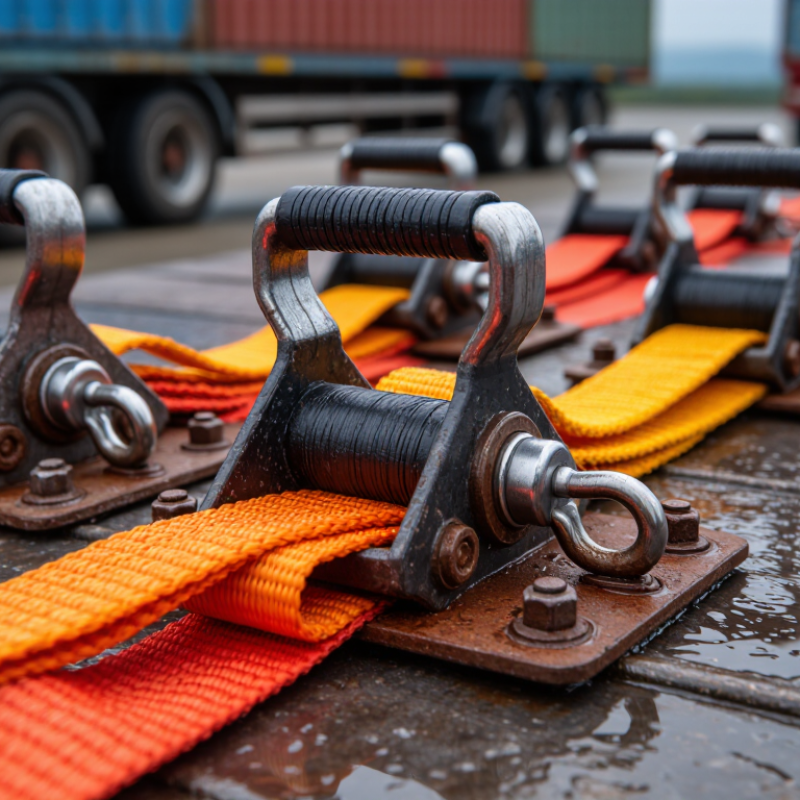
Core components include the webbing, spool, axle, handle, release lever, and end fittings. Polyester resists stretching and moisture better than many alternatives. Protective sleeves reduce abrasion where webbing touches sharp corners. Hooks should sit fully inside rated anchor points, not on fragile edges. The label should show length, material, working load limit, and inspection information.

FMCSA cargo-securement guidance requires the aggregate working load limit to reach at least half the cargo weight in covered U.S. applications. European practice commonly references EN 12195-2 for lashing equipment. Standards differ by route. Check the destination rules.

In field use, damaged stitching is easy to miss. So is a bent axle.

A practical inspection should examine cuts, heat glazing, rust, distorted hooks, and unreadable labels. One imperfect habit remains common: choosing straps by appearance. That can fail when vibration, wet weather, or repeated loading changes the real conditions.
Key Safety Standards for International Buyers in 2026

In 2026, international buyers should treat ratchet straps as engineered load-securing equipment, not ordinary webbing. The key reference for many road-transport purchases is EN 12195-2, but local rules and cargo practices may differ. Ask for the standard edition, test method, and certificate scope. Check the label for LC, STF, SHF, webbing length, and batch traceability. LC means lashing capacity; it is not the same as breaking strength. That distinction prevents dangerous overconfidence. Technical files should match the printed label. Independent laboratory evidence is more useful than a generic quality claim.

Before purchase, inspect stitching, hooks, axle, handle, and edge protection. Webbing should show no cuts, melted fibers, severe abrasion, or chemical damage. For sea, air, or cross-border transport, confirm whether the strap suits the handling environment. Salt, freezing temperatures, sharp corners, and repeated tension can reduce performance. Use the supplier’s stated working limits, never a guessed capacity. Some buyers focus on price and overlook replacement records. A simple register can record batch numbers, inspections, and retirement dates. I would not accept a certificate without checking its issuer, test sample, and validity. This step is easy to skip. That is the uncomfortable weakness in many procurement systems. Even a compliant strap can fail when cargo weight, friction, angles, or anchorage points are misjudged. Training matters as much as hardware.

How to Match Strap Capacity With Different Loads

2026 Best Ratchet Straps for Global Buyers?

How to Match Strap Capacity With Different Loads

Choosing a ratchet strap starts with the load, not the strap color. Check the working load limit, or WLL, printed on the label. WLL is different from breaking strength. A strap rated for 500 kilograms does not automatically secure a 500-kilogram machine. Tie-down angle, friction, movement, and anchor strength all affect real performance. The weakest point controls the system.

For example, a smooth steel cabinet can slide more easily than a boxed wooden load. It may need additional straps, stronger pretension, and edge protection. A compact 300-kilogram tool can create high forces during sudden braking. A wider load may need straps positioned across separate anchor points. Keep the strap near the load, but avoid sharp corners and twisted webbing. Protect the fabric where it touches metal edges.

Use the labeled WLL and follow the applicable transport requirements for the destination. Inspect the webbing, hooks, stitching, and ratchet before every trip. Cuts, melted fibers, bent hooks, or damaged labels deserve replacement. Do not extend the handle with a pipe. Excessive force can damage the strap or anchor point. I have seen users select capacity from cargo weight alone. That shortcut feels practical, but it ignores movement. Recheck tension after the load settles, especially with flexible or uneven cargo. Loose straps need correction.

2026 Best Ratchet Straps for Global Buyers: Matching Strap Capacity With Different Loads

The chart uses a 50% aggregate Working Load Limit (WLL) baseline for cargo restraint. The per-strap figure assumes two evenly loaded straps and is calculated from the cargo mass.

For example, a 2-tonne load requires a minimum aggregate WLL of 1 tonne under this baseline, or approximately 0.5 tonne per strap when using two straps. Actual requirements depend on tie-down method, friction, load geometry, road regulations, and the applicable local standard. Always select straps with a rated WLL equal to or higher than the calculated requirement.

Calculation reference: aggregate tie-down WLL = at least 50% of cargo weight, based on the cargo securement principle in U.S. FMCSA 49 CFR 393.102. Values shown are metric planning calculations.

Comparing Materials, Hooks, Lengths, and Weather Resistance

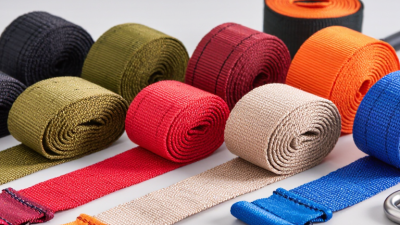
Global buyers need ratchet straps matched to cargo, climate, and handling conditions. Polyester webbing offers strong abrasion resistance and limited stretch. It suits machinery, pallets, and outdoor transport. Polypropylene is lighter and resists moisture, but it can degrade faster under strong sunlight. Material quality matters more than a low purchase price.

Hooks deserve close inspection. Coated steel hooks resist corrosion, while flat hooks can sit neatly against rails and anchor points. Wire hooks are flexible, but they may slip from unsuitable attachment points. Check the working load limit, stitching, handle movement, and webbing edges before use. A strap that looks clean may still have hidden damage.

Length should allow secure tension without excessive loose webbing. Measure the cargo and anchor distance, then leave practical room for tightening. Very long straps create extra tails and possible snagging. Short straps may force poor positioning.

Weather resistance is also regional. Rain, salt air, freezing temperatures, and ultraviolet exposure affect service life differently. No strap is weatherproof forever.

Tips: Store straps dry and away from direct sunlight. Do not use knots to shorten them. Replace any strap with cuts, melted fibers, distorted hooks, or unreadable labels. Recheck tension after the first few miles. This small step is often skipped, and that is where judgment can fail. A careful buyer should also confirm local transport requirements and independent test documentation before ordering large quantities.

Global Sourcing Factors: Suppliers, Certification, and Shipping Cost

For global buyers, the best ratchet straps are not always the cheapest products. Supplier reliability, certification, and shipping cost often decide the real value.

A capable supplier should provide clear specifications, including webbing width, break strength, working load limit, hook material, and strap length. Request production samples before placing a large order. Inspect stitching, ratchet movement, labels, and corrosion protection. Factory photos help, but they prove very little. An independent audit is stronger evidence. Ask how the supplier controls material batches and handles defective products. A low price may hide inconsistent tension performance.

Certification requires careful checking. Standards differ by destination and transport application, so buyers should confirm local requirements before ordering. Request current test reports from an accredited laboratory, not only a supplier-made certificate. Verify that the report matches the exact strap model and production material. Check traceability on packaging and labels. This step is often rushed. It should not be.

Shipping can change the purchase decision. Compare unit price with landed cost, including packaging, freight, insurance, customs charges, and destination handling. Ratchet straps are compact, but cartons can become heavy quickly. Ask for quotes under clearly stated Incoterms. Consolidated sea freight usually lowers cost, while urgent air freight can erase the saving. I have seen buyers focus on product price and overlook port delays. That mistake remains surprisingly common. Quality control also needs time. A rushed shipment is rarely a real saving.

2026 Best Ratchet Straps for Global Buyers? – Global Sourcing Factors: Suppliers, Certification, and Shipping Cost
Product Sourcing Profile Typical Application Common Webbing Material Typical Lashing Capacity Common Strap Lengths Supplier Region for Cost Planning Relevant Certification or Standard Recommended Quality Evidence Indicative Sea-Freight Cost* Key Buying Consideration
Light-Duty Consumer Strap Motorcycles, garden equipment, luggage, and household cargo Polyester webbing; commonly 25 mm wide 250–500 daN 2–5 m South and Southeast Asian manufacturing hubs Request compliance with applicable local consumer-product requirements; EN 12195-2 may be used when the product is marketed as a cargo-lashing device Webbing tensile-test report, stitching inspection, buckle-cycle test, and batch traceability US$0.80–2.00/kg
Consolidated sea freight, port-to-port planning range
Confirm that the stated capacity is the lashing capacity, not the webbing breaking strength
Standard Cargo Tie-Down Cartons, pallets, furniture, appliances, and general commercial transport High-tenacity polyester; commonly 25–35 mm wide 500–1,000 daN 4–10 m China, Vietnam, India, and Türkiye are common sourcing regions for export production EN 12195-2:2020 is a widely recognized European reference for web lashings Declaration of conformity, independent breaking-strength test, label verification, and production inspection US$0.60–1.50/kg
Consolidated sea freight, port-to-port planning range
Specify standard lashing labels showing LC, STF, SHF, length, material, and manufacturer batch code
Heavy-Duty Ratchet Strap Construction equipment, industrial components, steel products, and machinery Polyester webbing; commonly 50 mm wide 1,000–2,500 daN 6–12 m East and South Asian industrial textile supply chains; regional production may reduce lead time EN 12195-2:2020 or an equivalent national cargo-securing standard, depending on destination market Full-load tensile test, elongation test, abrasion test, corrosion test for hardware, and third-party factory audit US$0.50–1.30/kg
Full-container or consolidated sea-freight planning range
Use independent test results for the complete assembly because buckle strength and stitching affect the final rating
Extra-Heavy Industrial Strap Mining parts, transformers, heavy machinery, and oversized project cargo Heavy polyester webbing; commonly 75 mm wide or wider 2,500–5,000 daN 8–15 m Specialized industrial textile producers in Asia and Europe Project-specific engineering documentation; EN 12195-2 may be relevant where the design falls within its scope Lot-specific test certificate, engineering drawing, dynamic test data, hardware material certificate, and inspection plan US$0.45–1.20/kg
Large-volume ocean-shipping planning range, excluding destination charges
Check edge protection, corner loading, temperature exposure, and whether the design is suitable for repeated use
Short-Endless Loop Strap Bundling pipes, timber, metal products, and compact loads Polyester webbing; commonly 25–50 mm wide 500–2,000 daN 0.5–3 m Regional or near-market suppliers can be competitive because product volume is low and customization is simple EN 12195-2 may apply when used as a transport lashing; other applications require separate risk assessment Seam-strength test, webbing identification, abrasion evaluation, and colorfastness check for outdoor use US$0.90–2.40/kg
Small-volume consolidated freight planning range
Define the required loop length, contact surface, working temperature, and reuse cycle before ordering
Stainless-Hardware Marine Strap Boats, coastal equipment, outdoor machinery, and humid environments UV-resistant polyester with stainless or corrosion-resistant hardware 500–1,500 daN 3–8 m Marine-component clusters in Asia and Europe; hardware origin should be verified separately Applicable cargo-lashing standard plus material and corrosion documentation for the hardware Salt-spray test, stainless-steel grade confirmation, UV-aging test, and complete-assembly load test US$0.90–2.50/kg
Higher than standard straps because of hardware and lower-volume shipments
Do not accept “stainless” without a stated steel grade or material certificate
Private-Label Export Pack Retail distribution, e-commerce fulfillment, and multi-country resale Polyester webbing selected to the required load rating and packaging format 500–2,500 daN 2–12 m Export-oriented factories with packaging, labeling, and documentation capability Product-specific conformity documents; ISO 9001 is a quality-management certification, not proof of strap performance Pre-production sample approval, barcode and label review, inspection before shipment, and retained reference samples US$0.65–1.80/kg
Planning range varies with packaging volume and carton density
Separate product compliance, packaging compliance, and factory quality-management evidence in the purchase contract
Custom-Length Project Order Special cargo dimensions, fleet programs, and recurring industrial contracts Polyester webbing and hardware engineered to the required load case Specified by design Custom, commonly 5–20 m Direct factory sourcing is generally more economical at recurring volumes Destination-market requirements plus a documented engineering specification and test plan Golden sample, approved bill of materials, control plan, lot testing, serial or batch traceability, and change-control procedure US$0.45–1.40/kg
Depends strongly on order volume, carton utilization, and route
Agree on minimum order quantity, lead time, tooling responsibility, tolerances, and change-notification rules

* Freight figures are indicative planning ranges in USD per kilogram for ocean transport and exclude duties, customs clearance, insurance, terminal handling, inland delivery, fuel surcharges, and seasonal rate changes. Actual rates depend on origin, destination, Incoterms, shipment volume, cargo density, and booking date. “daN” means decanewton; 1 daN is approximately equal to 1 kilogram-force. Always verify the complete strap assembly, labels, test reports, and destination-market requirements before purchase.